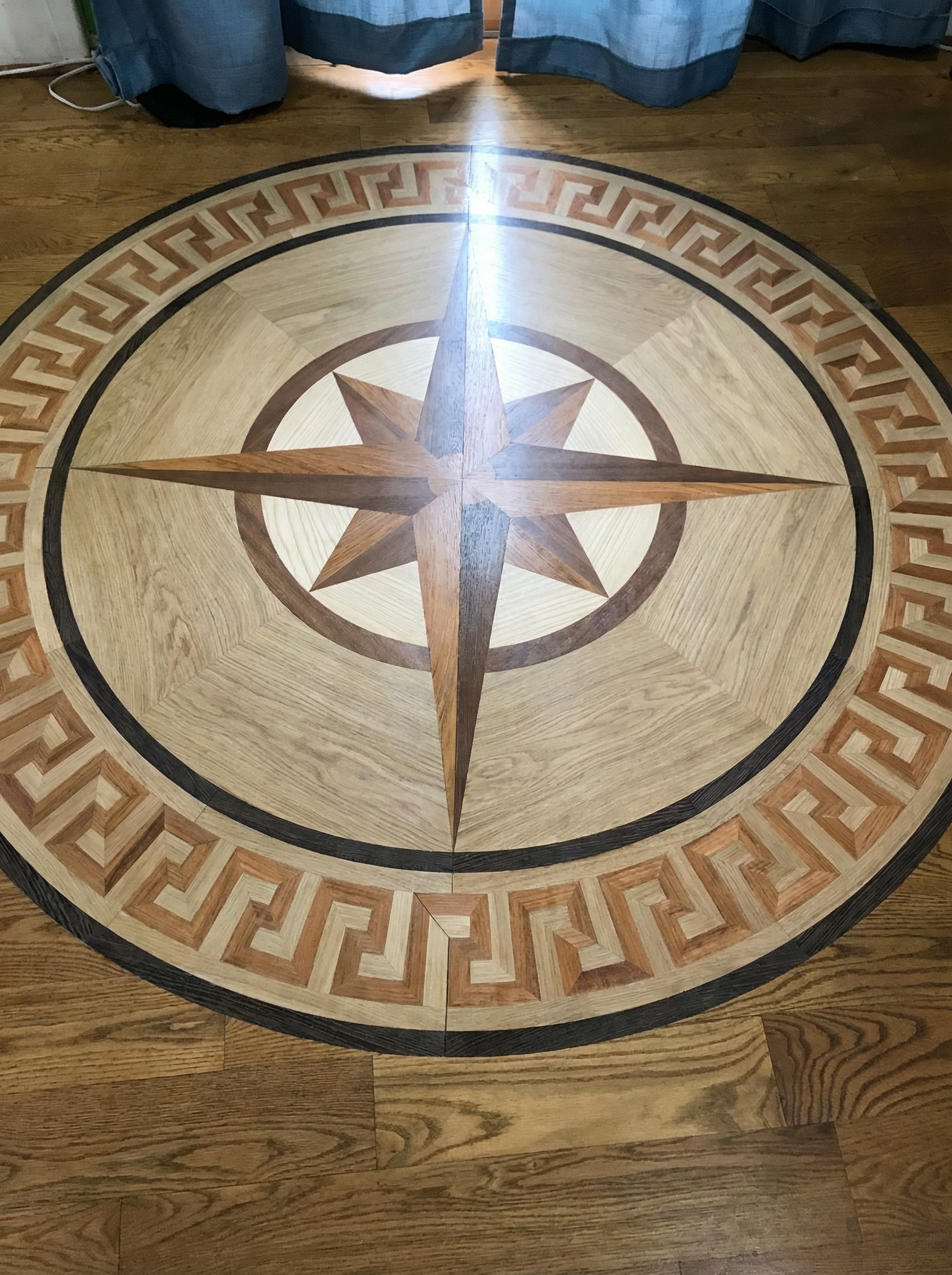
Parquet RT6 Flooring - Geometric Star Pattern
Parquet RT6 flooring showcases an intricate six-pointed star geometric pattern creating sophisticated visual impact through precise angular arrangements and contrasting wood species. This classic French parquet design features repeating star motifs radiating from central points, forming complex tessellations demanding exceptional manufacturing precision and installation expertise. Originally gracing 18th century Parisian estates and royal chambers, RT6 patterns continue defining luxury flooring installations where distinctive character and timeless elegance remain paramount design priorities.
Pattern Design Characteristics and Geometric Complexity
The six-pointed star configuration defines RT6 pattern identity, with each star composed of twelve individual wood pieces arranged creating precise 60-degree angles radiating from central meeting points. This geometry requires exceptional manufacturing accuracy as even minor dimensional variations prevent proper piece alignment destroying pattern integrity and visual continuity. The angular precision necessary for successful RT6 installations exceeds requirements for simpler parquet styles where forgiving straight-line patterns accommodate slight tolerances without visible defects.
Tessellation principles govern RT6 pattern layouts enabling seamless repeating designs covering unlimited floor areas without interruption or visual discontinuity. The star motifs interlock perfectly, sharing edges and vertices creating continuous geometric flows where individual pattern modules disappear into unified wholes. This mathematical precision contributes to RT6's enduring appeal as patterns maintaining perfect symmetry and balance regardless of installation scale or room configuration challenges.
The pattern's radial symmetry creates dynamic visual effects as viewing angles change throughout spaces. Light reflection varies across angled surfaces producing shimmer and depth impossible achieving with simple rectilinear layouts. This optical complexity adds visual interest preventing monotony while maintaining sophisticated restraint appropriate for formal residential and commercial environments expecting refined aesthetic presentations without excessive ornamentation or busy decorative excess.
Color contrast strategies dramatically affect RT6 visual impact. High-contrast combinations pairing light maple or ash against dark walnut or wenge create bold graphic statements emphasizing geometric precision and pattern complexity. Medium-contrast pairings using oak and cherry produce more subtle results where patterns emerge gradually rewarding careful observation rather than demanding immediate attention. Species selection should consider grain patterns as well as color since figured woods can either enhance or compete with geometric designs depending on scale relationships and visual balance.
Wood Species Selection for RT6 Parquet
White oak serves as the traditional choice for RT6 installations, offering neutral cream-to-tan coloring providing excellent backgrounds for darker accent species while delivering proven durability supporting decades of heavy use. Oak's moderate hardness (Janka 1360) resists wear without excessive brittleness, and the straight consistent grain patterns don't compete visually with geometric complexity. The species' widespread availability and reasonable pricing make oak practical for large-scale installations where material costs significantly impact project economics.
American walnut provides rich chocolate-brown tones creating dramatic contrast when paired with lighter oak or maple components. The wood's fine grain and natural luster enhance sophistication while extreme hardness (Janka 1010) delivers durability appropriate for residential applications. Walnut's premium pricing reflects limited availability and high demand, but the species' distinctive character justifies investment for discriminating projects where material quality and aesthetic impact outweigh budget considerations.
Brazilian cherry (Jatoba) introduces warm reddish-brown coloring adding visual warmth while delivering exceptional hardness (Janka 2350) suitable for demanding commercial installations expecting heavy traffic and abusive service conditions. The species' natural color variation creates visual interest within individual pieces while overall consistency maintains pattern clarity and geometric precision. Brazilian cherry's dimensional stability minimizes seasonal movement preventing gaps between complex angled pieces where expansion and contraction would prove particularly problematic.
Wenge offers dramatic near-black coloring creating maximum contrast for contemporary installations favoring bold graphic effects. The straight pronounced grain adds texture complementing rather than competing with geometric patterns. Wenge's extreme hardness (Janka 1630) ensures long-term durability though density requires carbide cutting tools and careful installation planning. The species commands premium pricing but delivers unmistakable character distinguishing luxury installations from standard wood flooring applications.
Hard maple provides nearly white coloring ideal for light-colored components in high-contrast RT6 designs. The wood's fine uniform texture and subtle grain create clean backgrounds emphasizing darker accent species without visual distraction. Maple's exceptional hardness (Janka 1450) exceeds oak delivering superior wear resistance for high-traffic commercial applications. The species' availability and moderate pricing make maple practical for large-scale projects requiring substantial quantities of light-colored materials.
Exotic species combinations including teak, rosewood, and purpleheart create extraordinary floors showcasing rare premium materials. These installations command exceptional pricing reflecting material costs and specialized expertise required sourcing and working difficult species. Exotic combinations prove most appropriate for signature installations where flooring becomes focal architectural feature justifying substantial investment in irreplaceable craftsmanship and materials.
Manufacturing Precision and Modern Technology
Contemporary RT6 parquet production relies on CNC (Computer Numerical Control) technology delivering dimensional accuracy impossible achieving through traditional hand-cutting methods. Five-axis CNC routers maintain tolerances within 0.003 inches ensuring perfect fit between adjacent pieces despite complex angled geometries. This precision proves essential for RT6 patterns where twelve pieces meet at central points requiring exact matching preventing gaps that would compromise visual quality and structural integrity.
CAD (Computer-Aided Design) software enables pattern layout optimization before manufacturing begins. Designers create virtual installations testing various species combinations and geometric arrangements identifying optimal solutions maximizing visual impact while respecting technical feasibility and budget parameters. Digital prototyping eliminates expensive trial-and-error approaches reducing waste while improving quality and enabling complex designs previous generations could only imagine without practical means for execution.
Laser measurement systems verify dimensional accuracy throughout production processes. Each piece undergoes automated inspection comparing actual dimensions against CAD specifications, with components outside tolerance limits automatically rejected preventing defective pieces from reaching installation sites. This rigorous quality control ensures only perfect components enter final assemblies delivering flawless results justifying premium pricing commanded by RT6 parquet installations.
Moisture content management during manufacturing prevents future problems arising from dimensional instability. Wood components undergo kiln drying to 6-8% moisture content matching typical interior building environments. Precise moisture control minimizes seasonal movement preventing gaps between angled pieces where expansion and contraction would prove particularly visible and problematic. Manufacturers store finished components in climate-controlled facilities maintaining stable conditions until shipping and installation commence.
Installation Expertise and Professional Execution
Installing RT6 parquet demands master-level expertise exceeding skills necessary for standard wood flooring or simpler parquet patterns. The complex angled geometries require precise alignment without forgiving straight-line references typical installations provide. Professional installers specializing in complex parquet prove essential achieving results worthy of premium materials and sophisticated designs characterizing RT6 patterns.
Subfloor preparation demands exceptional attention as angled pieces prove less forgiving than rectangular components when dealing with substrate irregularities. Flatness tolerances of 1/16 inch over 10 feet represent minimum standards, though optimal results require even tighter specifications approaching 1/32 inch variance. Professional installers use self-leveling compounds and precision grinding equipment achieving necessary flatness preventing pattern distortion and ensuring long-term performance.
Layout planning begins at room centers establishing primary axes governing overall pattern orientation. Installers work outward from centers ensuring equal border widths on opposite walls while maintaining pattern symmetry throughout spaces. Border treatments require careful planning as star patterns rarely align perfectly with rectangular room perimeters, necessitating custom border designs complementing field patterns while accommodating geometric realities of architectural constraints.
Adhesive application requires precision as excess adhesive squeezing between angled joints proves difficult removing without damaging surrounding pieces. Professional installers use controlled trowel techniques applying consistent adhesive layers providing adequate coverage without excess. Premium urethane adhesives deliver superior bond strength and gap-filling properties beneficial when working with complex geometries where perfect substrate flatness proves unattainable despite best preparation efforts.
Environmental control during installation maintains stable temperature and humidity preventing dimensional changes during critical installation periods. Professional installers monitor conditions continuously adjusting HVAC systems keeping 45-55% relative humidity and 65-75°F temperature ranges. These controlled conditions minimize wood movement during installation when gaps between angled pieces would prove particularly visible and problematic affecting final appearance and long-term performance.
Design Applications and Architectural Settings
Grand entrance foyers showcase RT6 parquet establishing immediate impressions of quality and sophistication. The geometric complexity and material quality signal attention to detail extending throughout properties creating confidence among visitors and guests. Center medallions featuring RT6 patterns surrounded by simpler borders create focal points directing attention while preventing pattern complexity from overwhelming spaces. These installations prove particularly effective in luxury residential estates and prestigious commercial properties where distinctive character distinguishes properties from standard construction.
Formal dining rooms benefit from RT6's refined elegance and proven durability. The pattern's geometric precision complements formal furnishings and architectural details without competing for attention. Dark walnut and light oak combinations create sophisticated palettes appropriate for traditional interiors while contemporary species pairings including wenge and maple suit modern aesthetic preferences. RT6's timeless character ensures relevance despite changing design trends protecting long-term investment value.
Executive office suites leverage RT6 parquet communicating professionalism and cultural awareness. The flooring signals attention to quality and detail extending throughout business operations creating confidence among clients and business partners. The pattern's French heritage connects to centuries of design excellence reinforcing sophisticated brand identities for professional services firms, financial institutions, and consulting practices serving discerning clientele expecting superior quality and refined aesthetic presentations.
Museum galleries appreciate RT6's artistic merit and historical significance. Installations become part of permanent collections rather than purely functional building elements, contributing to institutions' cultural missions while providing durable surfaces supporting visitor traffic and display requirements. The pattern's geometric complexity creates visual interest without distracting from exhibited artworks and artifacts, providing sophisticated backgrounds enhancing rather than competing with gallery contents.
Historic restorations specify RT6 patterns matching original installations or maintaining period-appropriate character. The pattern's long history ensures availability of historical precedents guiding restoration decisions and verification of authenticity. Modern manufacturing technology enables producing historically accurate patterns while benefiting from contemporary quality control and dimensional precision exceeding capabilities of historical craftspeople working without benefit of CNC equipment and laser measurement systems.
Finishing Systems and Surface Protection
Oil-based polyurethane finishes provide traditional protection delivering proven durability and ease of maintenance. These finishes build substantial surface film through multiple coats creating moisture barriers and abrasion resistance supporting decades of service in demanding applications. The amber cast characteristic of oil-based products enhances warm-toned species including walnut and cherry while slightly muting cooler ash and maple tones, considerations requiring evaluation during species selection and finish specification phases.
Water-based polyurethane alternatives preserve natural wood colors without amber toning characteristic of oil-based products. These finishes prove particularly important for installations emphasizing light-dark contrasts where color accuracy maintains design intent and visual impact. Lower VOC emissions support green building certifications and healthier indoor environments particularly important for residential applications and occupied commercial spaces where air quality concerns influence material selections.
Natural oil finishes including tung oil and Danish oil penetrate wood surfaces enhancing grain patterns and natural luster without heavy surface buildup. These treatments require more frequent maintenance than film-forming polyurethanes but deliver authentic appearance showcasing wood character. Oil finishes prove effective for installations emphasizing natural material beauty over maximum protection, accepting higher maintenance requirements in exchange for superior aesthetic presentation.
Hardwax oil systems combine oil penetration with surface wax protection delivering enhanced durability while maintaining matte natural appearance. These European finishing products grow increasingly popular for contemporary projects rejecting glossy surfaces preferring authentic material presentation. Regular maintenance involves buffing with specialty pads renewing wax layers without sanding or stripping required for polyurethane refinishing, extending service intervals and reducing lifecycle costs.
UV-cured finishes provide instant curing enabling rapid project completion important for commercial installations requiring minimal downtime. These high-performance coatings deliver exceptional hardness and scratch resistance suitable for retail environments and public spaces expecting heavy traffic and abusive service conditions. The technology requires specialized equipment limiting availability to commercial finishing facilities rather than field application by installation contractors, necessitating factory-finished components or specialized finishing services.
Maintenance Requirements and Long-Term Care
Proper maintenance preserves RT6 parquet beauty and protects significant financial investment these extraordinary floors represent. The pattern's complexity and premium materials justify maintenance programs exceeding typical hardwood flooring care protocols ensuring optimal appearance and performance throughout extended service lives.
Daily maintenance requires gentle dust mopping or vacuuming with soft brush attachments preventing abrasive particle accumulation. Regular cleaning removes contaminants before they cause problems maintaining pristine appearance with minimal effort and expense. The pattern's angled surfaces benefit from soft cleaning methods avoiding aggressive scrubbing potentially damaging finish surfaces or dislodging pieces along complex joint lines where excessive force could prove problematic.
Periodic cleaning uses pH-neutral products specifically formulated for hardwood flooring. These specialized cleaners avoid harsh chemicals potentially damaging finishes or reacting with natural wood oils some species contain. Microfiber mops apply minimal moisture while effectively lifting accumulated soils from surface textures created by grain patterns and geometric complexity across different wood species within unified installations.
Protective measures prevent damage and extend floor lifespan. Quality entry mats at all exterior doorways trap dirt and moisture before reaching parquet. Area rugs protect high-traffic pathways distributing loads preventing localized wear patterns. Furniture pads under all leg contacts prevent indentation and scratching from movement during normal use and occasional rearrangement. These simple precautions dramatically extend floor service life protecting substantial investment in premium materials and expert craftsmanship.
Climate control maintains stable humidity preventing excessive seasonal movement causing gaps or buckling. HVAC systems with humidity monitoring and control capabilities prove essential protecting valuable parquet investments. Humidification during dry winter months and dehumidification during humid summers maintain 40-50% relative humidity year-round preventing damage requiring expensive repairs potentially compromising pattern integrity and visual quality.
Professional maintenance programs provide periodic assessment and specialized care. Experienced contractors inspect installations identifying potential problems before they become serious, while annual or bi-annual professional services including deep cleaning and finish touch-up maintain optimal appearance. This ongoing investment protects substantial initial expenditure ensuring floors deliver full expected service life while maintaining beauty justifying original installation decisions.
Historical Context and Contemporary Revival
RT6 parquet patterns originated in 18th century French estates where aristocratic patrons commissioned elaborate flooring installations demonstrating wealth, taste, and cultural sophistication. These early installations required exceptional hand craftsmanship as each piece was individually cut and fitted without benefit of modern tools or measurement systems. Historical RT6 floors surviving centuries demonstrate remarkable durability justifying contemporary interest in time-proven designs maintaining relevance despite dramatic changes in construction technology and aesthetic preferences.
Royal palace installations including Versailles and Fontainebleau showcased RT6 and similar patterns establishing standards luxury residential and commercial projects continue referencing today. These historical precedents provide documented evidence of design excellence and material longevity informing contemporary specification decisions. The patterns' association with French cultural heritage adds narrative value beyond purely aesthetic considerations, connecting modern installations to significant design history enriching architectural experiences.
The pattern experienced mid-20th century decline as modernist design philosophies favoring simplicity and minimal ornamentation dismissed elaborate parquet as excessive and outdated. Economic pressures and changing construction practices further reduced parquet installations as less expensive products including vinyl composition tile and carpet dominated commercial and residential markets. This period threatened parquet craft continuity as skilled practitioners retired without training sufficient successors maintaining traditional expertise.
Contemporary revival beginning in the 1980s reflected growing appreciation for historical craftsmanship and desire for distinctive character differentiating luxury projects from standard construction. Affluent clients sought unique installations showcasing quality materials and exceptional execution impossible replicating through mass production. This renewed demand supported craft revival as new generations learned traditional skills while incorporating modern technology enhancing rather than replacing time-proven techniques.
Modern manufacturing technology enables producing RT6 patterns with unprecedented precision and consistency while reducing costs making elaborate parquet accessible to broader markets. CNC equipment and laser measurement systems deliver quality exceeding capabilities of historical craftspeople working entirely by hand, democratizing access to designs previously reserved for royal palaces and aristocratic estates. This technological evolution preserves traditional aesthetics while improving performance and expanding availability supporting contemporary parquet renaissance.
Comparing RT6 to Other French Parquet Patterns
RT6 shares geometric complexity with Stars parquet though RT6's six-pointed stars differ from Stars pattern's more elaborate radiating designs. Both patterns create dynamic visual effects through angular geometries and contrasting species, though RT6's more restrained approach suits formal traditional interiors while Stars patterns better accommodate dramatic contemporary spaces expecting bold graphic statements.
Palace parquet exceeds RT6 complexity incorporating ornate medallions and curved elements impossible achieving through RT6's rectilinear geometry. Palace patterns command premium pricing reflecting manufacturing challenges and material requirements, while RT6 delivers sophisticated character at more accessible price points. The choice between patterns depends on project budgets, desired visual impact, and interior design philosophies balancing ornamentation against restraint.
Louvre parquet features nested rectangular frames creating different visual rhythm than RT6's radiating stars. Louvre patterns prove easier installing as straight edges provide more forgiving tolerances than RT6's complex angles, potentially reducing installation costs while delivering comparable sophistication. Both patterns suit formal applications though Louvre's rectilinear geometry better complements traditional architecture while RT6's dynamic stars add visual energy appropriate for spaces benefiting from geometric complexity.
Chevron parquet delivers geometric interest through simpler V-pattern arrangements requiring less manufacturing precision than RT6's angled star configurations. Chevron proves more affordable both for materials and installation while maintaining distinctive character differentiating installations from standard wood flooring. RT6 justifies premium investment through superior visual complexity and historical significance appropriate for signature installations where flooring becomes primary architectural feature.
Versailles parquet represents ultimate parquet complexity incorporating elaborate borders and central medallions exceeding RT6 pattern requirements. These extraordinary installations command highest pricing reflecting extreme manufacturing challenges and material consumption. RT6 provides accessible alternative delivering French parquet character and proven performance without extreme costs associated with most elaborate historical patterns.
Investment Value and Pricing Considerations
Material costs for RT6 parquet typically range $50-85 per square foot depending on species selection and pattern complexity. Standard oak and walnut combinations prove more economical while exotic species including wenge, Brazilian cherry, or figured maple command premium pricing. Custom sizing and border treatments add costs reflecting design complexity and manufacturing challenges, with elaborate installations potentially exceeding $100 per square foot for materials alone.
Installation expenses range $35-55 per square foot reflecting specialized expertise and labor intensity RT6 patterns require. Professional installers command premium rates justified by years of training and experience necessary achieving flawless results. Complex installations with extensive angled work or elaborate border treatments may exceed $65 per square foot for master-level craftsmanship producing results worthy of premium materials and sophisticated designs.
Total project costs including materials, installation, and finishing typically range $90-150 per square foot for quality RT6 parquet installations. While substantial, these investments create floors providing 50-100 years service life with proper maintenance and periodic refinishing. Lifecycle cost analysis demonstrates value proposition particularly when compared against inferior products requiring replacement every 10-20 years generating repeated expenses and disruption.
Property value enhancement represents significant return on parquet investment. Distinctive custom flooring becomes signature feature differentiating luxury properties in competitive markets. Appraisers recognize quality materials and craftsmanship reflected in higher valuations and faster sales velocity. RT6 installations signal comprehensive quality standards throughout properties creating halo effects influencing buyer perceptions and willingness to pay premium pricing.
Long-term durability justifies initial investment through decades of reliable service. Properly maintained RT6 floors retain beauty and structural integrity far longer than carpeting, vinyl, or laminate products requiring frequent replacement. The ability to refinish hardwood surfaces multiple times extends service life while refreshing appearance, creating long-term value impossible achieving with products lacking refinishing capabilities. This longevity makes RT6 parquet sound financial decision for residential and commercial applications expecting extended occupancy and consistent quality standards.
Sustainable Sourcing and Environmental Responsibility
FSC (Forest Stewardship Council) certification verifies sustainable forest management practices maintaining ecosystem health, biodiversity, and local community benefits. FSC-certified species including oak, walnut, and maple prove readily available from North American sources supporting regional economies while minimizing transportation impacts. Specifying certified materials demonstrates environmental commitment while ensuring legal harvest and responsible forestry practices protecting forests for future generations.
Domestic species selection reduces environmental impacts associated with international shipping while supporting domestic forestry and manufacturing industries. North American hardwoods including oak, walnut, maple, and cherry provide excellent RT6 materials without requiring overseas sourcing. Local materials also simplify documentation requirements and reduce supply chain complexity improving project predictability and reducing risks associated with international trade disruptions.
Reclaimed wood alternatives avoid new harvest impacts while providing aged character and historical provenance. Salvaged oak from demolished buildings, decommissioned factories, and dismantled structures supplies markets with legal documented materials exhibiting exceptional beauty and sustainability credentials. Reclaimed materials command premium pricing but deliver environmental benefits and storytelling value resonating with environmentally conscious clients and historically sensitive projects.
Long service life represents fundamental sustainability advantage as durable products requiring less frequent replacement reduce overall environmental impacts through extended use cycles. RT6 parquet installations potentially serving 50-100 years with proper maintenance far exceed sustainability performance of carpeting, vinyl, or laminate products typically lasting 10-20 years before requiring disposal and replacement. This longevity makes hardwood parquet environmentally superior choice despite higher initial resource consumption.
Refinishing capabilities extend floor lifespan while avoiding disposal and replacement impacts. Hardwood surfaces can be sanded and refinished multiple times refreshing appearance without removing and replacing underlying materials. This renewability proves impossible with carpeting, vinyl, or other covering products requiring complete removal and disposal when surface wear becomes unacceptable, generating waste streams and consumption of replacement materials.
Visit Our Los Angeles Showroom
Experience the extraordinary beauty of RT6 parquet firsthand at our Los Angeles showroom. We maintain samples of various parquet patterns in different wood species combinations, allowing you to see actual materials and pattern configurations before making final design decisions.
Our parquet specialists provide personalized consultations discussing project visions, reviewing species options, and developing comprehensive proposals addressing design, materials, installation, and finishing specifications ensuring successful outcomes exceeding expectations.
Contact Walter's Flooring today to schedule your private consultation:
Phone: 213-792-5908
Email: info@legnohardwood.com
Address: 9216 S. Vermont Ave, Los Angeles, CA 90044
Showroom Hours:
Monday - Friday: 8:00 AM - 5:00 PM
Saturday & Sunday: By Appointment
Whether planning estate construction, historic restorations, museum installations, or luxury residential projects, Walter's Flooring delivers unparalleled expertise, premium materials, and master craftsmanship creating RT6 parquet installations representing the finest expression of French parquet tradition combined with modern manufacturing excellence.
Explore Expanded Options
Browse additional star pattern variations, geometric parquet designs, and custom wood species combinations not shown on this page.
View Full Gallery →