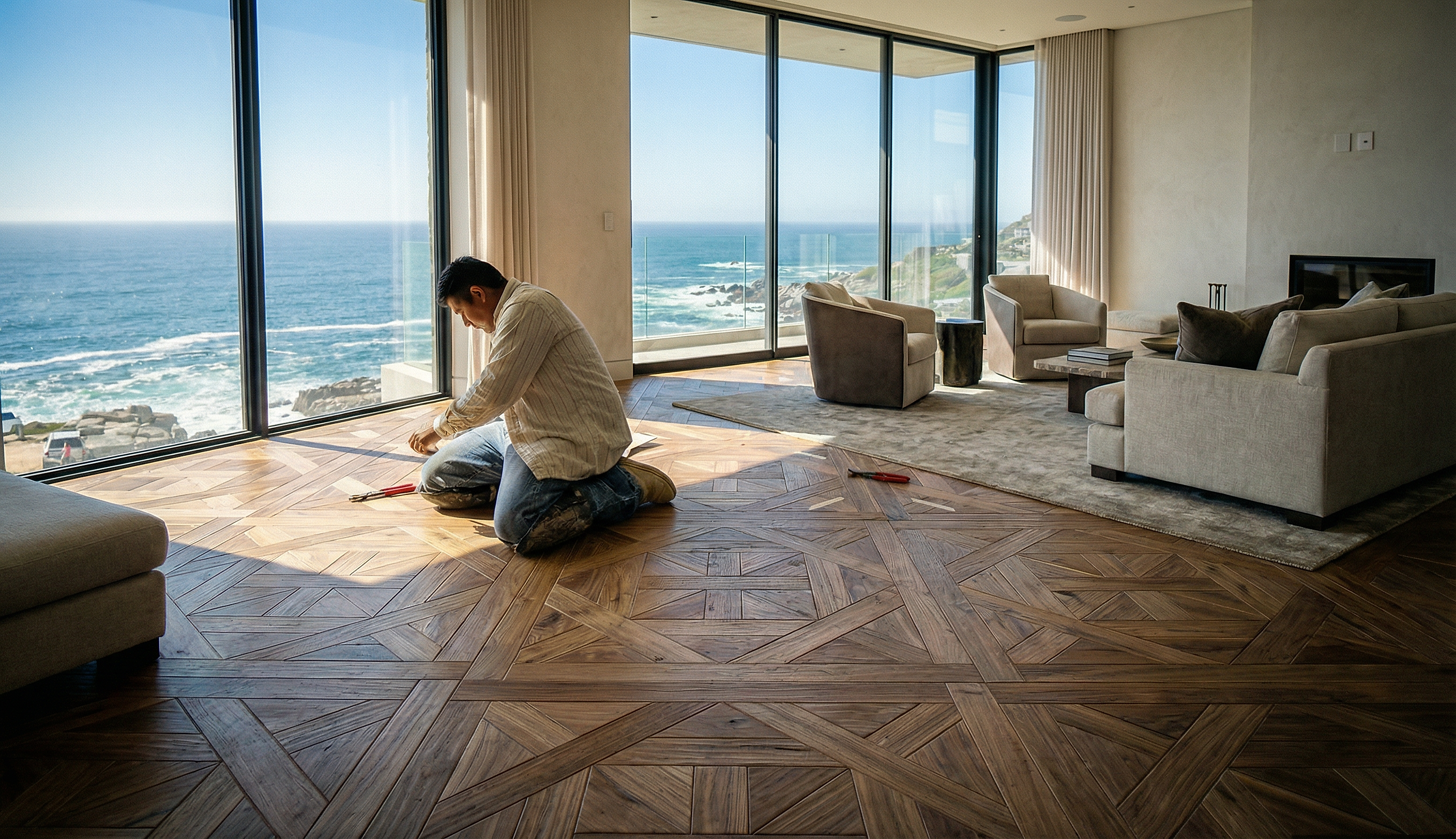
Bordeaux Parquet Flooring - French Basketweave Classic
Bordeaux parquet flooring represents the timeless elegance of French wine country estate design, featuring distinctive basketweave patterns that defined luxurious residential architecture throughout the Bordeaux region during the 18th and 19th centuries. These classic geometric arrangements combine practical durability with refined aesthetic character, creating floors that served both functional needs of active estate environments and aristocratic design sensibilities celebrating French cultural heritage.
Historical Origins in Bordeaux Wine Country
Bordeaux parquet patterns emerged from the prosperous wine estates of southwestern France during the 17th and 18th centuries, when vineyard owners built grand chateaux reflecting their commercial success and aristocratic aspirations. Unlike the ornate palace patterns favored in Paris salons, Bordeaux designs emphasized practical elegance appropriate to active estate life balancing formal entertaining with daily wine production operations.
The region's distinctive basketweave patterns drew inspiration from traditional woven wine baskets used for grape harvesting and transport. This agricultural motif translated naturally into geometric wood flooring arrangements featuring perpendicular elements creating organized visual texture reminiscent of wicker craftsmanship. The pattern choice reflected both practical considerations and symbolic associations connecting architectural details with wine production traditions defining regional identity.
Early Bordeaux estate installations utilized local French oak harvested from forests surrounding the wine regions. The wood's exceptional hardness (Janka 1360), attractive grain patterns, and proven durability made it ideal for high-traffic areas experiencing the wear of servants, guests, and commercial activities associated with wine production and distribution. Natural color variation within oak heartwood created subtle pattern enhancement without requiring multiple species or elaborate staining techniques.
The basketweave pattern's perpendicular grain orientation provided exceptional dimensional stability crucial for buildings experiencing temperature and humidity fluctuations common in wine cellar environments. Unlike parallel plank installations that moved uniformly during seasonal changes, basketweave arrangements distributed expansion and contraction forces evenly preventing the cumulative gap formation and warping plaguing simpler floor constructions.
As Bordeaux wines gained international recognition during the 18th century, estate architectural features including distinctive parquet patterns spread beyond France to wine-producing regions worldwide and to luxury residences throughout Europe and America. The Bordeaux pattern became synonymous with refined wine country aesthetic blending agricultural heritage with aristocratic sophistication.
Classic Basketweave Pattern Characteristics
Bordeaux parquet features distinctive basketweave geometric arrangements creating organized visual texture through perpendicular wood element placement. The pattern typically consists of square modules containing short wood pieces arranged alternating horizontal and vertical creating the characteristic woven appearance.
Individual basketweave modules typically measure 12-16 inches square, providing human-scale geometric organization suitable for both intimate residential spaces and expansive great halls. Each module contains multiple short wood pieces measuring 2-4 inches wide arranged in pairs or triples creating the basketweave fill pattern. The perpendicular orientation between adjacent groups creates the woven visual effect.
Border treatments define individual modules and organize larger floor compositions. Simple border strips measuring 1-2 inches wide frame basketweave modules providing visual clarity and structural reinforcement. These borders typically use grain direction perpendicular to interior fills emphasizing geometric definition while contributing to overall dimensional stability through additional grain orientation variation.
Pattern scale adapts to room proportions and architectural context. Smaller 12-inch modules create refined patterns appropriate to libraries, studies, and formal dining rooms. Larger 16-inch modules deliver bolder presence suitable for entry foyers, great halls, and commercial installations. Pattern proportions remain consistent across scale changes maintaining characteristic Bordeaux appearance while adjusting physical dimensions.
The basketweave arrangement creates subtle directional variation across floor surfaces as light angles change throughout the day. Wood grain orientation affects light reflection creating shifting texture patterns impossible achieving with uniform parallel installations. This dynamic visual character adds depth and interest to floor surfaces without requiring complex multicolor schemes or elaborate geometric details.
Wood Species Selection and Character Development
Traditional Bordeaux parquet installations favor French oak reflecting historical material availability and regional architectural traditions. However, contemporary projects incorporate diverse wood species enabling custom color palettes and unique aesthetic character while maintaining classic pattern geometry.
Reclaimed oak flooring provides authentic Bordeaux aesthetic with exceptional durability and attractive natural appearance. European white oak offers pale honey blonde to medium brown coloring with distinctive ray flake figure visible in quarter-sawn material. American white oak delivers comparable characteristics with domestic availability and competitive pricing suitable for large-scale residential and commercial projects.
Oak's moderate hardness withstands heavy traffic in active household environments including kitchens, dining rooms, and entry areas while maintaining appearance quality over decades of service. The wood accepts stains and finishes beautifully enabling custom color development matching specific design requirements from natural tones to contemporary gray and white-washed treatments.
Reclaimed chestnut creates warm authentic European character impossible replicating with new materials. American chestnut salvaged from historic structures provides genuine period appearance with distinctive golden brown coloration and natural patina developed through decades or centuries of service. European chestnut remains available from overseas suppliers maintaining traditional material specifications though limited availability and premium pricing restrict applications.
Walnut species deliver rich dark installations suitable for formal Bordeaux-inspired interiors. American black walnut (Janka 1010) provides moderate hardness adequate for residential applications while chocolate brown coloration with purple-gray undertones creates sophisticated aesthetic character. Walnut's relatively uniform grain patterns complement basketweave geometry without introducing excessive visual complexity competing with pattern organization.
Maple and ash create contemporary light-toned Bordeaux interpretations popular in modern residential projects. Hard maple (Janka 1450) delivers exceptional durability exceeding oak with pale cream to light honey coloring creating bright refined appearance. White ash provides comparable hardness (Janka 1320) with slightly more prominent grain figure adding subtle texture to basketweave patterns.
Exotic species including Brazilian cherry, teak, and various tropical hardwoods enable unique custom installations combining Bordeaux pattern tradition with distinctive color palettes and extreme durability. These materials suit high-traffic commercial applications or luxury residential projects seeking differentiation from conventional domestic species while departing from strict historical authenticity.
Installation Techniques and Technical Requirements
Bordeaux parquet installation requires professional expertise and meticulous attention to detail achieving the precision necessary for attractive basketweave pattern presentation. The relatively complex geometric arrangements and numerous small pieces make DIY installation impractical for most homeowners despite basketweave patterns being less demanding than ornate palace or medallion designs.
Subfloor preparation establishes the foundation for successful installation. Bordeaux parquet requires subfloor flatness within 1/8 inch variation over 10-foot spans, though 1/16 inch tolerance delivers optimal results. Uneven subfloors cause individual pieces rocking under foot traffic, compromise adhesive bonding, and potentially create squeaks or movement requiring expensive repairs.
Pattern layout planning begins with accurate room measurements and geometric calculations determining optimal module placement. Installers typically center patterns from room midpoints ensuring symmetric arrangement avoiding narrow cut pieces at perimeters. This often requires custom module sizing rather than standard dimensions accommodating specific room proportions while maintaining appropriate visual scale.
Professional installers establish laser-level reference lines creating perfect grid alignment throughout installation areas. Initial module placement receives maximum attention establishing accurate geometry for remaining work. Pattern errors compound rapidly across large floors making initial precision critical preventing problems becoming apparent only after substantial work completion requiring partial removal and reinstallation.
Adhesive selection depends on wood species, subfloor material, and environmental conditions. Urethane-based adhesives provide excellent bond strength with moisture resistance suitable for concrete subfloors, basements, or installations over radiant heating systems. Traditional mastic adhesives work well over wood subfloors in climate-controlled environments offering easier working characteristics and proven performance using traditional installation methods.
Moisture content control proves essential for dimensional stability and long-term performance. Parquet pieces should measure 6-9% moisture content at installation matching ambient environment conditions. Acclimation periods minimum 72 hours in installation environment allow wood moisture equilibration minimizing post-installation movement. Professional installers verify moisture content using electronic meters ensuring specification compliance before work begins.
Expansion gaps measuring 3/4 inch minimum at all perimeter locations accommodate seasonal wood movement without causing buckling during high humidity periods. Base moldings conceal these gaps maintaining clean finished appearance. Transition locations between rooms or different flooring materials require similar expansion provisions preventing restraint causing damage during natural seasonal cycles.
Design Applications and Architectural Context
Bordeaux parquet suits various residential and commercial applications where French wine country aesthetic establishes design foundations. The pattern's refined geometric character and historic associations create distinctive environments celebrating European architectural traditions and luxury lifestyle associations.
Formal dining rooms represent ideal Bordeaux parquet applications. The pattern's sophisticated appearance creates appropriate ambiance for entertaining while perpendicular grain orientation provides practical durability withstanding chair movement and foot traffic. Medium to dark oak or walnut installations complement traditional wood furniture and architectural millwork common in formal dining environments.
Wine cellars and tasting rooms leverage Bordeaux parquet's authentic wine country associations creating environments celebrating wine culture and European traditions. Reclaimed oak installations provide period character matching barrel aging and wine storage aesthetic while basketweave patterns organize functional areas for storage, tasting, and circulation. The flooring becomes integral design element reinforcing authentic wine country atmosphere.
Entry foyers utilize Bordeaux parquet establishing immediate design impression reflecting European sophistication and luxury positioning. The basketweave pattern creates visual interest without overwhelming complexity while providing practical durability for highest-traffic household areas. Pattern scale adjusts to foyer dimensions ensuring appropriate visual balance between floor design and architectural volume.
Library and study spaces benefit from Bordeaux parquet's refined character creating contemplative environments conducive to concentration. The organized basketweave patterns provide visual interest without distraction while medium brown oak tones deliver warmth avoiding sterile contemporary aesthetics. The flooring complements traditional wood paneling, built-in bookcases, and leather furnishings common in library interiors.
Commercial hospitality venues including boutique hotels, upscale restaurants, and wine bars utilize Bordeaux parquet establishing premium brand positioning and memorable guest experiences. The distinctive flooring differentiates venues within competitive markets while delivering practical durability justifying investment in high-traffic commercial environments. Wine-themed restaurants particularly benefit from authentic Bordeaux pattern associations reinforcing concept design narratives.
Finishing Systems and Surface Protection
Finish selection significantly impacts Bordeaux parquet appearance, maintenance requirements, and service life. Modern finishing systems balance aesthetic objectives with practical performance needs ensuring floors deliver beauty and durability throughout decades of service in residential and commercial applications.
Oil-modified polyurethane finishes provide warm amber tones enhancing natural wood colors while building substantial surface protection. Multiple coat applications create durable barriers resisting moisture infiltration, food and beverage staining, and abrasion wear from foot traffic and furniture movement. Satin sheen levels prove most popular delivering subtle luster without excessive gloss highlighting surface imperfections or appearing overly formal.
Water-based polyurethane alternatives maintain clearer color presentation without amber cast characteristic of oil-based products. These finishes particularly suit light wood species or custom stain colors requiring accurate color rendition. Fast drying times enable rapid project completion minimizing installation disruption while low VOC emissions improve indoor air quality during application and long-term occupancy.
Natural oil finishes including tung oil, linseed oil, and Danish oil formulations penetrate wood fibers enhancing natural character without building surface films. These treatments deliver authentic historic appearance matching period Bordeaux estate installations using traditional finishing methods. However, they require more frequent reapplication and provide less moisture and stain protection than film-forming polyurethane systems.
Hardwax oil hybrid products combine penetrating oil benefits with surface wax protection delivering enhanced durability while maintaining natural wood appearance. These systems prove popular for Bordeaux aesthetic projects preferring matte surfaces over glossy protection. Hardwax oils enable easier spot repairs than polyurethane finishes avoiding complete floor refinishing for localized damage or wear patterns.
Surface preparation determines final finish quality. Professional installation includes thorough sanding progressing through multiple grits achieving perfectly smooth surfaces free from mill marks, adhesive residue, or installation damage. Final sanding creates optimal tooth for finish adhesion while removing any height variations between adjacent pieces ensuring level walking surfaces and uniform finish appearance.
Maintenance and Long-Term Care
Proper maintenance preserves Bordeaux parquet beauty and functionality throughout extended service life. Establishing appropriate care protocols from installation prevents damage requiring expensive restoration while maintaining appearance quality matching original installation standards.
Daily cleaning requires only dry dust mopping or vacuuming using floor brush attachments removing loose dirt, sand, and debris before abrasive particles cause finish wear or surface scratches. This simple maintenance prevents 90% of flooring damage requiring minimal time and effort while protecting substantial flooring investment.
Weekly damp cleaning using hardwood floor cleaning products formulated avoiding excessive moisture and harsh chemicals maintains surface cleanliness. Microfiber mops prove most effective applying minimal moisture while lifting accumulated soils from basketweave pattern details and grain textures. Cleaning products should dry quickly without leaving residue attracting dirt or dulling finish surfaces.
Protective measures prevent finish wear and surface damage extending maintenance intervals. Entry mats capture dirt and moisture before reaching wood floors. Area rugs in high-traffic zones distribute wear preventing concentrated patterns along circulation paths. Quality felt pads under furniture legs prevent scratches and dents from moving chairs, tables, and other furnishings.
Humidity control proves essential for dimensional stability and finish integrity. Maintaining 35-55% relative humidity year-round prevents excessive seasonal movement causing gaps during dry winter months or swelling and cupping during humid summers. Whole-house humidification during heating season and dehumidification during humid periods maintain stable conditions ideal for wood flooring performance.
Periodic refinishing restores appearance and protection when finishes show wear patterns or surface damage becomes excessive. Refinishing intervals depend on traffic levels and finish type. Residential installations typically require refinishing every 10-15 years. Commercial applications may need refinishing every 5-7 years. Oil-finished floors need recoating every 1-2 years though this maintenance occurs without extensive sanding or occupancy disruption.
Investment Value and Pricing
Bordeaux parquet represents significant flooring investment justified by exceptional longevity, timeless aesthetic appeal, and property value enhancement. Understanding complete project costs enables informed decision making and appropriate budget allocation for residential and commercial projects.
Material costs vary based on wood species selection, pattern complexity, and custom requirements. Domestic oak Bordeaux parquet typically ranges $40-60 per square foot for quality materials. Exotic species including walnut, cherry, or tropical hardwoods increase costs to $55-75 per square foot. Reclaimed materials command premium pricing $60-80 per square foot reflecting acquisition costs and historical character.
Professional installation costs range $25-45 per square foot depending on pattern complexity, room configuration, and regional labor rates. Standard basketweave patterns with regular modules fall toward lower range while custom designs with intricate borders or varied module sizes increase costs to $35-50 per square foot. These rates reflect skilled craftsman labor essential for quality installations achieving precise geometric alignment.
Long-term value considerations favor parquet investment over less expensive flooring alternatives. Quality Bordeaux parquet installations routinely provide 50-75 years service life with periodic refinishing maintaining appearance and performance. This longevity delivers lower lifecycle costs than materials requiring replacement every 10-15 years despite higher initial investment.
Property value enhancement represents another investment justification. Distinctive flooring becomes memorable feature differentiating properties in competitive real estate markets. Buyers recognize quality materials and craftsmanship reflected in asking prices and faster sales. Authentic European design elements appeal particularly to luxury market buyers valuing architectural character over generic contemporary finishes.
Visit Our Los Angeles Showroom
Experience Bordeaux parquet craftsmanship and design possibilities at our Los Angeles showroom. We maintain pattern samples in various wood species, finish options, and scale variations allowing clients to evaluate materials and visualize installations before committing to projects.
Our design consultants provide expert guidance discussing historical context, pattern variations, material selection, and installation planning. We develop detailed proposals addressing project requirements from initial concept through completion ensuring clients understand all aspects of their Bordeaux parquet investment.
Contact Walter's Flooring today to schedule your consultation:
Phone: 213-792-5908
Email: info@legnohardwood.com
Address: 9216 S. Vermont Ave, Los Angeles, CA 90044
Showroom Hours:
Monday - Friday: 8:00 AM - 5:00 PM
Saturday & Sunday: By Appointment
Whether planning wine country-inspired residential projects, restaurant and hospitality installations, or luxury commercial environments requiring authentic French design character, Walter's Flooring delivers expertise, materials, and craftsmanship creating extraordinary Bordeaux parquet floors defining architectural excellence.
Explore Expanded Options
Browse additional parquet patterns, wood species combinations, and custom geometric designs not shown on this page.
View Full Gallery →