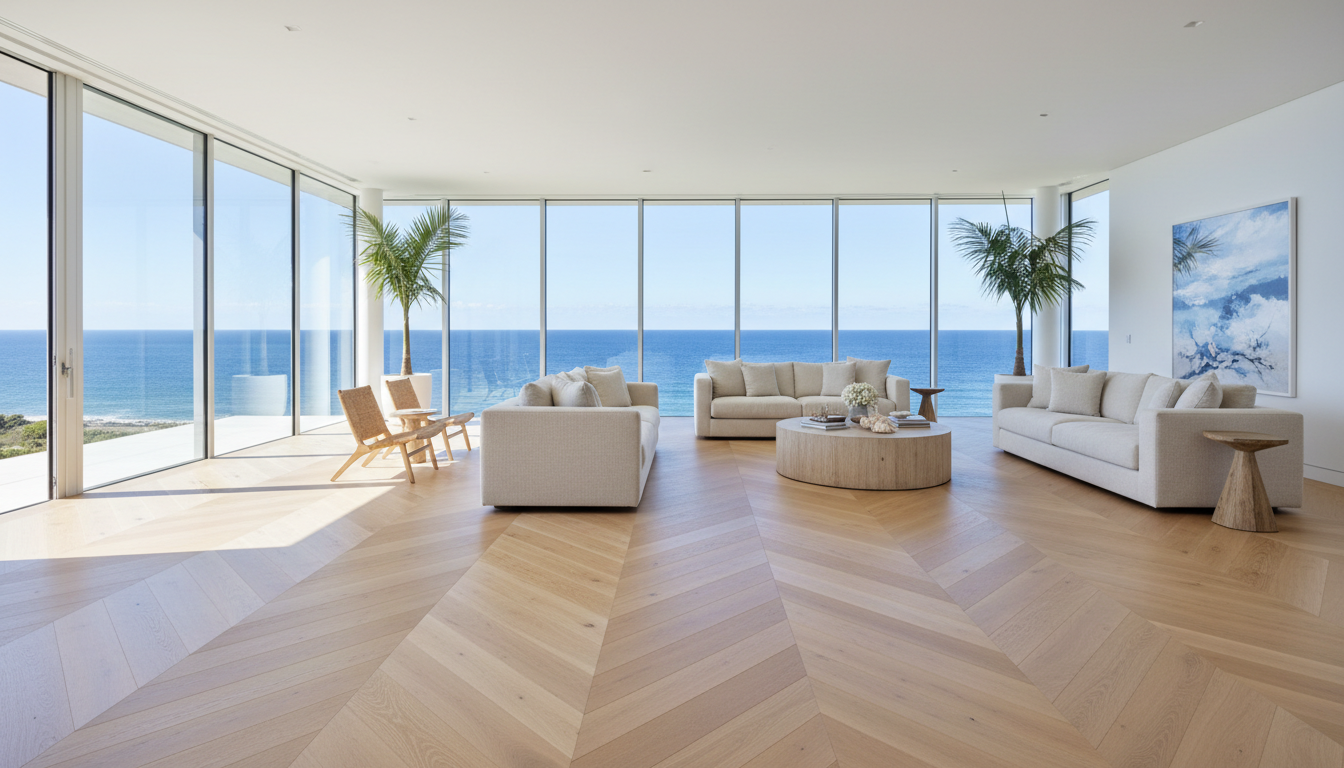
Reclaimed Chevron Parquet Flooring
Chevron parquet flooring represents one of the most sophisticated and timeless patterns in hardwood flooring design. This masterpiece pattern brings authentic French architectural style to your home, featuring parquet flooring where rectangular planks are precisely cut at 45-degree angles and meet at perfect points to form continuous V-shaped arrows. Originally installed in the most famous castles and palaces of France, this elegant pattern is now available through our Los Angeles showroom. We can assist in designing the appropriate chevron parquet pattern size and wood species combination for your specific space.
Chevron Parquet Gallery
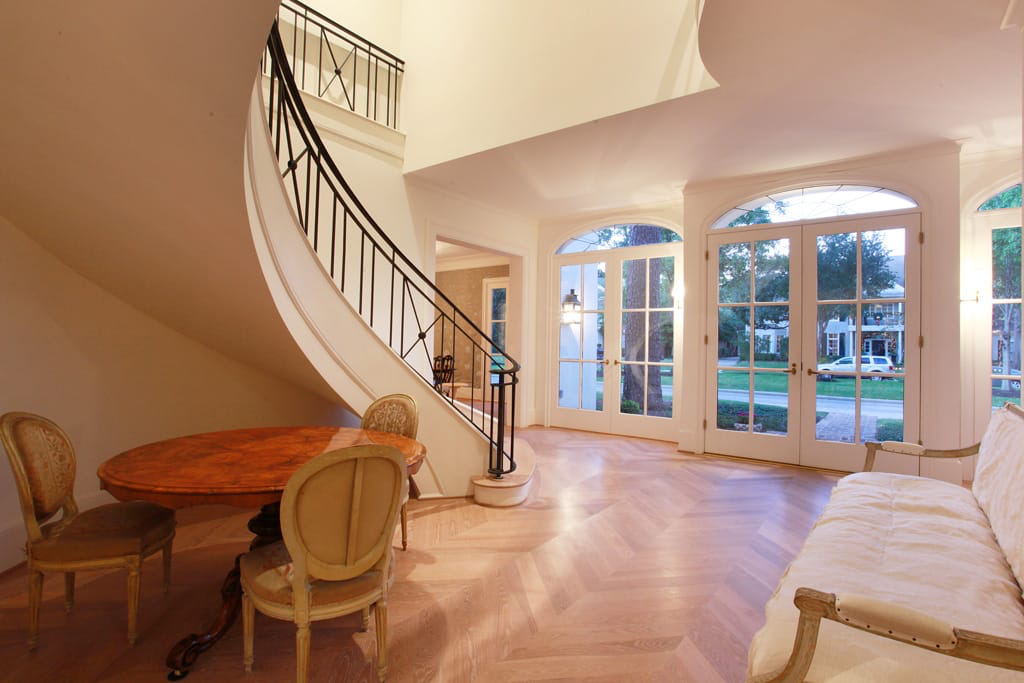
White Oak Chevron - Whitewash |
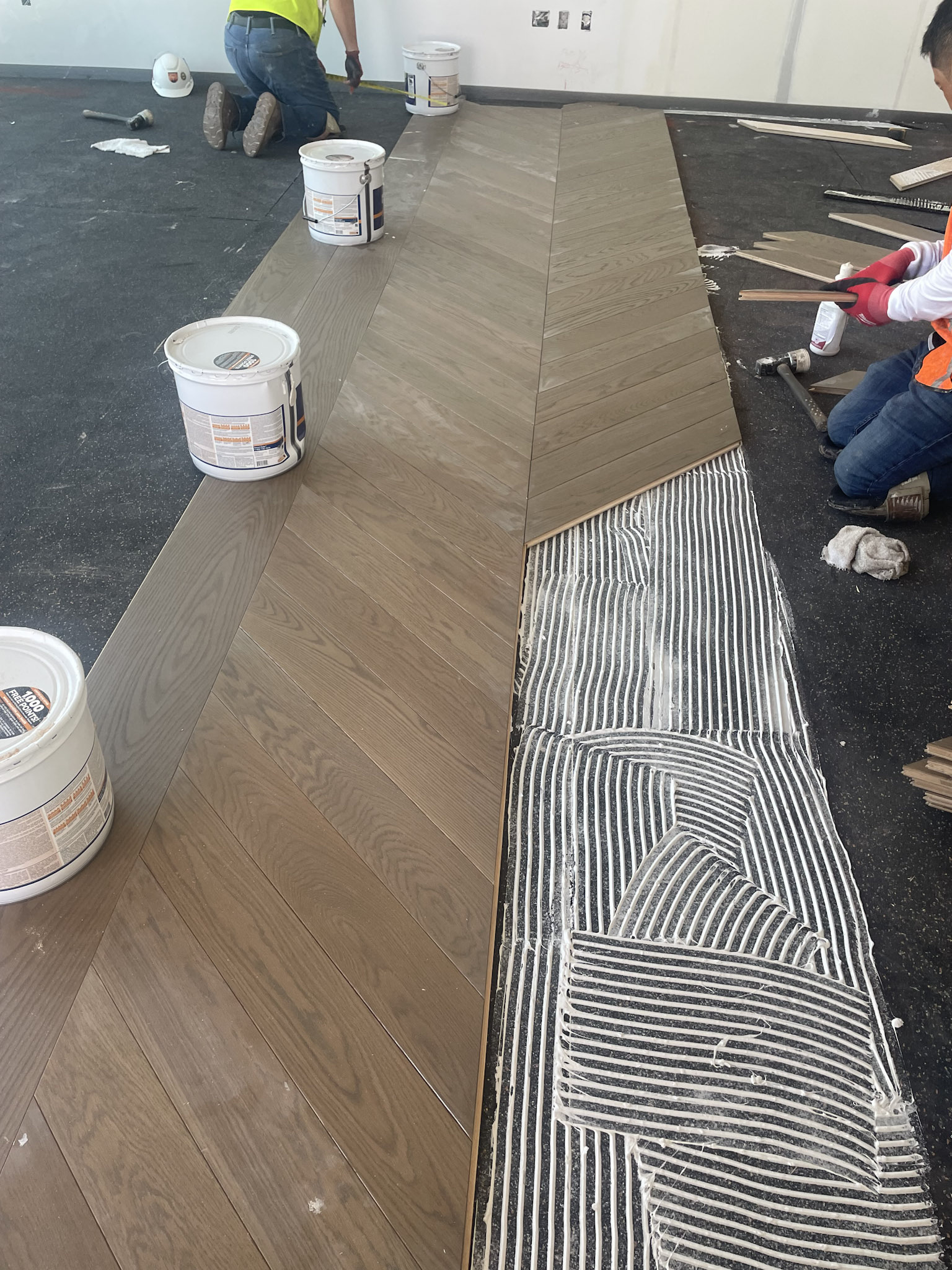
Walnut Chevron - Rich Chocolate |
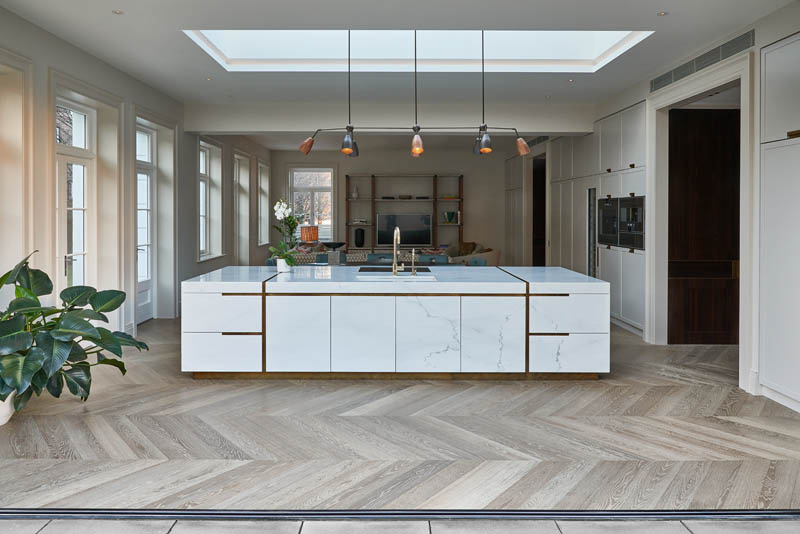
Grey Oak Chevron - Contemporary |
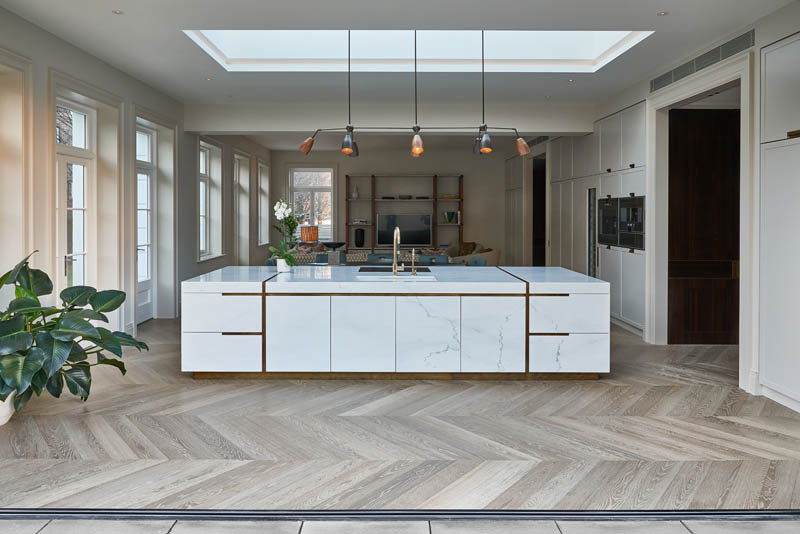
European Oak Chevron - Natural Honey |
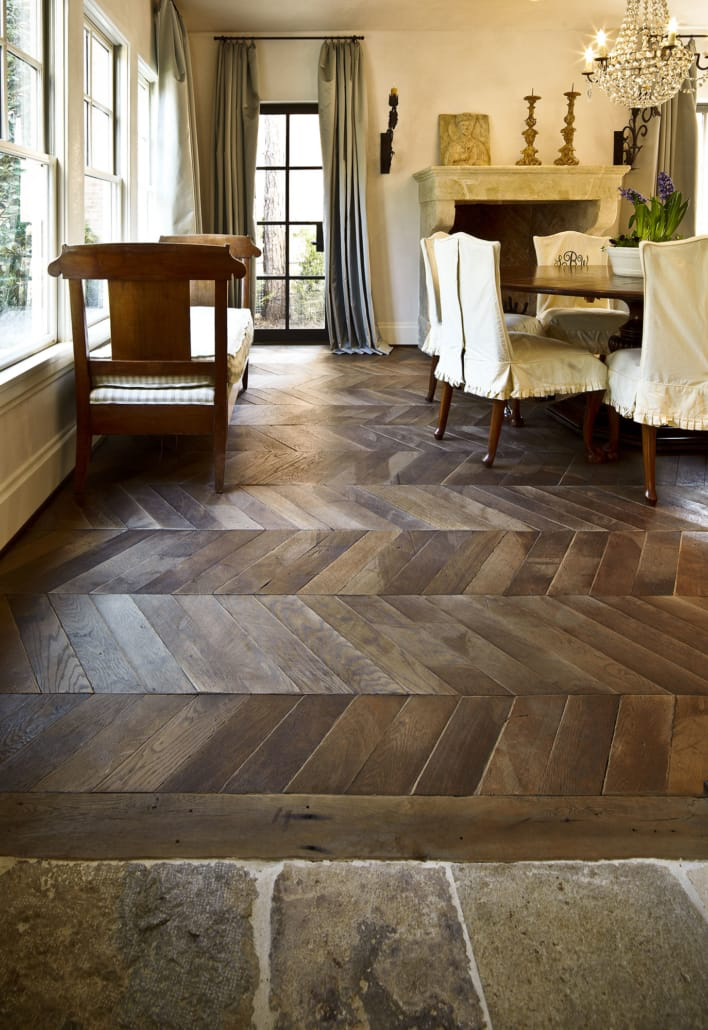
Wide Plank Chevron - Bold Pattern |
|
Custom Wood Species and Color Options
We fabricate chevron parquet flooring in any wood species to match your design vision. Popular species selections include white oak, red oak, European oak, French oak, American oak, Douglas fir, walnut, hard maple, hickory, cherry, ash, and exotic hardwoods. Each species brings unique grain characteristics, color tones, and durability properties to the chevron pattern. Our design team can guide species selection based on your aesthetic preferences, performance requirements, and budget parameters.
Custom color finishes range from light whitewash and natural honey tones to medium browns, rich espressos, and contemporary grey stains. We can match any stain color to coordinate with existing woodwork, cabinetry, or design samples you provide. Mixed-species chevron patterns combine contrasting woods—such as walnut alternating with oak—to create dramatic visual impact where the color contrast emphasizes the geometric precision of the V-pattern. Browse our complete gallery showcasing chevron installations in various species and finishes, similar to our extensive WoodFloorsLA.com gallery featuring diverse parquet patterns and custom installations.
Browse Our Chevron Parquet Collection
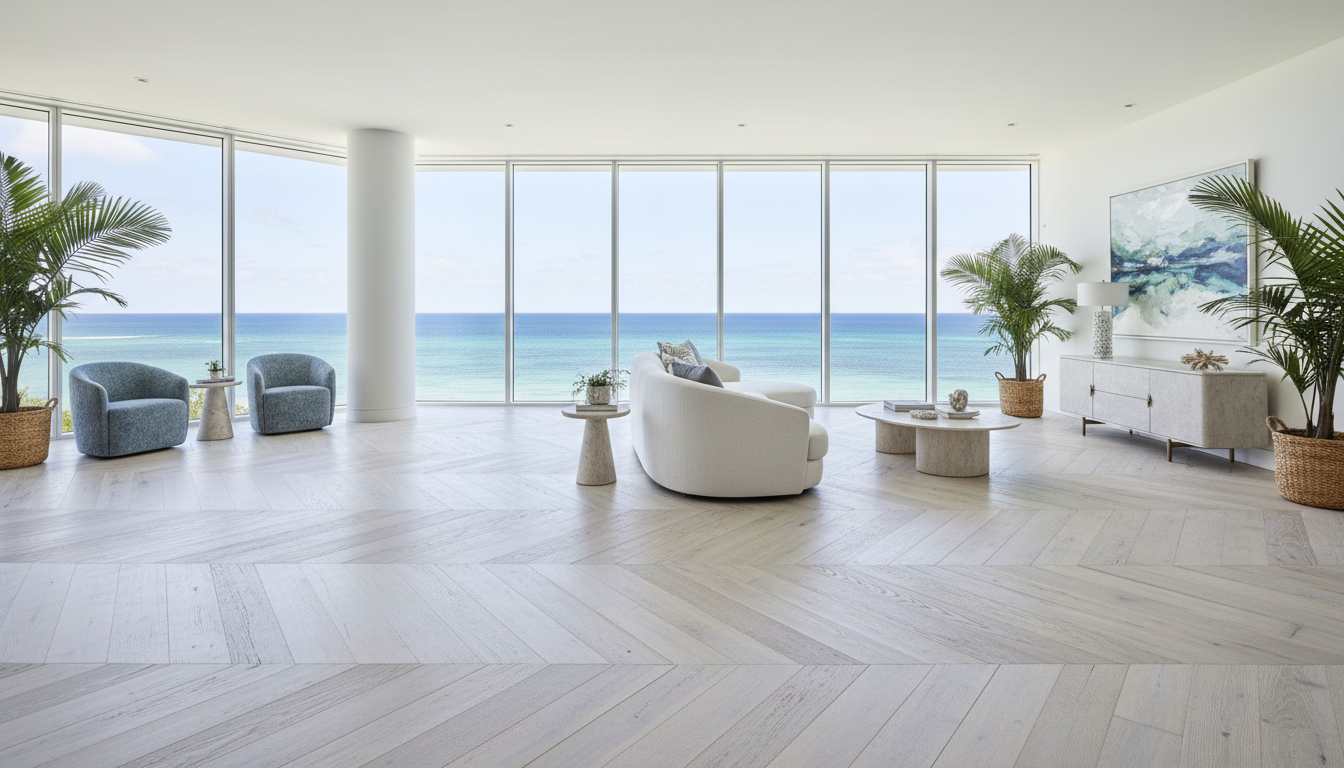
Chevron Light Whitewash Oak |
Chevron Natural Oak Honey |
Chevron Grey Oak |
|
Chevron Walnut |
Chevron European Oak |
Chevron Mixed Woods |
The Classic Chevron Pattern Design
The chevron parquet pattern is distinguished from herringbone by one critical design element: each plank is cut at a precise angle so that the ends meet at a perfect point, creating continuous V-shaped zigzag lines that flow across the entire floor. Unlike herringbone where rectangular planks are staggered in an offset pattern, chevron planks align point-to-point to form unbroken diagonal lines. This geometric precision creates a sense of movement and sophisticated visual rhythm that has made chevron flooring the preferred choice for European palaces, luxury hotels, and high-end residential installations for centuries.
Traditional chevron angles typically range from 30 to 60 degrees, with 45 degrees being the most common and visually balanced option. The angle selection affects the pattern's visual impact—steeper angles create narrower V-shapes with more frequent directional changes, while shallower angles produce wider, more relaxed V-patterns. The plank width also influences the pattern's scale and character. Narrow 2-3 inch planks create a delicate, refined chevron suitable for smaller rooms, while wider 5-7 inch planks produce a bold, dramatic pattern appropriate for grand spaces.

The installation precision required for chevron parquet cannot be overstated. Because each plank must be cut to exact specifications and positioned to maintain perfect alignment across the entire floor, chevron installation demands master-level craftsmanship. Even a one-degree variation in cutting angle will cause the pattern to drift out of alignment across a room's width, creating visible imperfections that compound with distance. This technical challenge is why authentic chevron parquet commands premium pricing—the material waste from angled cutting and the skilled labor required for flawless execution make it one of flooring's ultimate luxury investments.
Wood Species Selection for Chevron Flooring
Reclaimed oak remains the most popular species for chevron parquet flooring due to its ideal combination of stability, workability, and aesthetic appeal. The tight, consistent grain pattern of oak doesn't compete visually with the chevron geometry, allowing the pattern itself to be the focal point. White oak and European oak varieties offer superior dimensional stability compared to red oak, minimizing seasonal expansion and contraction that could stress the precisely fitted chevron joints. The neutral color palette of oak accepts stains beautifully, enabling custom color matching to any interior design scheme.
Light whitewash finishes on chevron oak create bright, contemporary interiors with Scandinavian or coastal design influences. The V-shaped chevron pattern remains clearly visible even with minimal color contrast because the grain direction changes at each plank junction catch and reflect light differently. This subtle tonal variation adds depth and texture to monochromatic color schemes while maintaining the clean, airy aesthetic demanded by modern architecture. Whitewashed chevron works exceptionally well in oceanfront properties where natural light enhances the pattern's dimensional qualities throughout the day.
Walnut chevron parquet offers rich chocolate-brown coloring with purple undertones that create sophisticated, warm interiors. The natural color variation within walnut boards—ranging from pale sapwood to dark heartwood—adds organic interest to the geometric precision of the chevron pattern. When chevron planks are carefully selected to alternate between lighter and darker walnut tones, the pattern gains additional visual complexity without requiring multiple wood species. Walnut's superior hardness (1010 Janka rating) ensures the chevron pattern maintains its crisp definition even in high-traffic areas.
Mixed-species chevron patterns combine contrasting woods to create dramatic visual impact. Classic combinations include walnut with maple, wenge with ash, or cherry with white oak. The species contrast emphasizes the chevron geometry by making each V-angle clearly distinct. However, mixed-species installations require careful consideration of differential movement characteristics—pairing woods with similar expansion rates prevents seasonal gaps from opening along the pattern's joints. Engineered construction with a stable plywood core can help mitigate movement concerns in mixed-species applications.
Installation Methods and Technical Considerations
Glue-down installation is the only appropriate method for chevron parquet flooring. The angled cuts at each plank end create minimal surface area for gluing, making mechanical fastening (nails or staples) ineffective and likely to cause splitting. Premium urethane adhesives provide the bond strength necessary to hold the precisely positioned planks in permanent alignment. Installation begins at the room's centerline with two chevron planks meeting at their points, creating the first V-angle. The pattern then radiates outward symmetrically to both walls, ensuring perfect visual balance.
The subfloor preparation for chevron parquet must achieve exceptional flatness—typically within 1/8 inch over 10 feet, which is stricter than standard flooring specifications. Because chevron planks are relatively short (typically 18-36 inches), any substrate undulation will cause individual pieces to rock or sit at different heights, disrupting the smooth surface required for the pattern to appear uniform. Self-leveling compounds are almost always necessary to achieve this level of substrate perfection, especially in older homes with settling foundations or uneven concrete slabs.
Acclimation requirements for chevron parquet materials are critical to long-term performance. The wood must reach moisture equilibrium with the installation environment before cutting and installation begin. A minimum two-week acclimation period in the actual room at normal living conditions (60-80°F, 35-55% relative humidity) allows the wood to expand or contract to its stable dimensions. Failure to properly acclimate can result in gaps opening between planks after installation as the wood shrinks, or buckling as expansion forces build up against walls and create pressure within the pattern.
Border transitions typically frame chevron field patterns to solve the mathematical challenge of fitting angled planks against straight walls. A border of straight planks in the same or contrasting wood species creates clean edges and provides installation flexibility—the border width can be adjusted slightly to accommodate the room's exact dimensions without requiring custom plank widths in the chevron field. Borders also create natural transition points where chevron patterns meet standard plank flooring in adjacent rooms, preventing awkward pattern cutoffs at doorways.
Design Applications and Room Suitability
Formal living rooms and parlors benefit tremendously from chevron parquet flooring. The pattern's geometric sophistication elevates the room's formality without requiring ornate furniture or elaborate architectural details. The directional flow of the chevron V-angles can be oriented to emphasize the room's best features—pointing toward a fireplace, leading the eye toward floor-to-ceiling windows, or drawing attention to a grand piano or conversation area. In rooms with limited architectural interest, chevron parquet itself becomes the defining design element that establishes the space's character.
Open-concept floor plans use chevron parquet strategically to define functional zones without requiring walls or partitions. A chevron parquet area in the dining zone creates clear visual separation from adjacent kitchen or living areas that might feature simpler plank flooring. This flooring transition signals a change in room function while maintaining visual connection and flow throughout the open space. The formality implied by chevron parquet subtly reinforces the dining area's special status as a gathering space for meals and entertainment.
Grand entryways and foyers make powerful first impressions with chevron parquet flooring. The pattern immediately communicates attention to detail and investment in quality that sets expectations for the entire home. In large entry halls, the chevron pattern can be oriented to lead visitors' eyes toward the main living spaces, creating natural circulation flow. A contrasting border around the perimeter defines the entry as a distinct space while providing visual transition to the adjoining rooms' flooring materials.
Modern interpretations of chevron parquet embrace minimalist aesthetics through monochromatic color schemes and wider plank formats. Contemporary chevron installations often use 6-8 inch wide planks in single light or dark tones, referencing the classic pattern while avoiding the traditional formality associated with narrower, multi-toned versions. This updated approach makes chevron suitable for modern architecture where the pattern's geometric nature complements rather than contradicts the clean lines and simplified details of contemporary design.
Maintenance and Long-Term Care
Daily cleaning of chevron parquet requires soft-bristle brooms or microfiber dust mops that capture dirt without scratching the finish. The V-shaped pattern creates slight valleys at each angle junction where dust and debris can accumulate, making regular cleaning more important than with flat plank floors. Weekly vacuuming with a hardwood floor attachment (beater bar disabled) removes particles from these pattern recesses before they can cause abrasive wear to the finish coating.
Finish application for chevron parquet must build sufficient thickness to protect the wood while accommodating the pattern's dimensional complexity. Oil-based polyurethane finishes provide excellent durability and tend to pool slightly in the V-angle valleys, creating subtle shading that can actually enhance the pattern's visual depth. Water-based polyurethanes offer low-VOC application and faster drying times but require additional coats to achieve comparable protection levels. Regardless of finish type, three to four coats are typically necessary for high-traffic chevron installations.
Refinishing considerations make preventative maintenance particularly important for chevron parquet. While the floor can be sanded and refinished multiple times over its lifespan, the angled plank junctions create opportunities for sanding damage if equipment is not carefully controlled. Cross-grain sanding at the V-angles can create visible scratch patterns, and aggressive sanding can round over the sharp lines where planks meet, softening the pattern's geometric precision. Professional refinishing by craftsmen experienced with parquet patterns is essential to preserve the floor's architectural character.
Protection strategies should include entry mats at all exterior doors to capture moisture and abrasive particles before they reach the chevron floor, felt pads under all furniture legs to prevent scratching during movement, and area rugs in high-traffic pathways to distribute wear. Unlike plank flooring where individual damaged boards can be replaced relatively easily, damage to chevron parquet often requires extensive repair work to maintain pattern integrity. An ounce of prevention through protective measures and regular maintenance provides far better value than costly restoration work.
Chevron vs. Herringbone: Understanding the Differences
The fundamental distinction between chevron and herringbone patterns lies in how the planks are cut and positioned. Chevron planks have angled ends (typically 45 degrees) that meet at perfect points to create continuous V-shaped zigzag lines. Herringbone uses rectangular planks with square-cut ends that are staggered in an offset pattern, creating a broken zigzag effect. This structural difference means chevron patterns flow in unbroken diagonal lines across the floor, while herringbone creates a more fractured, brick-like appearance.
Visual impact differs significantly between the two patterns. Chevron's continuous V-lines create stronger directional flow and more pronounced movement across the floor surface. The pattern appears more formal and geometric due to its precision and symmetry. Herringbone's offset arrangement produces a softer, more organic appearance with less aggressive directionality. Many designers consider chevron more suitable for formal spaces while herringbone works well in both traditional and casual settings.
Installation complexity and material waste are considerably higher for chevron than herringbone. Every chevron plank requires precise angled cuts at both ends, creating substantial waste as triangular offcuts cannot be used elsewhere in the pattern. Herringbone planks use simple square cuts with minimal waste. The precision required to maintain perfect chevron alignment throughout a room also demands more skilled labor and longer installation time. These factors make chevron typically 30-50% more expensive than herringbone for comparable materials and room sizes.
Historical authenticity considerations may influence pattern selection for period homes. Chevron patterns dominate in French and Italian historical architecture, particularly in royal palaces and aristocratic estates. Herringbone appears more frequently in English and American traditional architecture. Homeowners restoring or recreating historical styles may choose patterns based on these geographical and cultural associations to maintain design authenticity.
Color Options and Finish Selection
Natural oak tones in honey and golden hues create warm, inviting chevron floors that work with traditional and transitional interior styles. These mid-tone finishes show wood grain clearly while providing enough color to hide minor dirt and wear between cleanings. Natural finishes also offer the greatest flexibility for future refinishing—the floor can later be lightened with whitewash techniques or darkened with stain application, allowing the chevron pattern to adapt to evolving design preferences.
Grey-toned finishes have become increasingly popular for chevron parquet in contemporary interiors. Custom grey stains applied to oak create sophisticated neutral backdrops that complement modern color palettes dominated by whites, greys, and black accents. The chevron pattern remains clearly visible even in monochromatic grey finishes because grain direction changes at each plank junction create subtle tonal variations. Cooler grey tones work particularly well in coastal properties and urban lofts where industrial-influenced design aesthetics prevail.
Dark chocolate and espresso finishes on chevron parquet create dramatic, high-contrast interiors with undeniable luxury appeal. These deep tones emphasize the chevron pattern's geometric precision by making each V-angle visually distinct through the interplay of light and shadow on the angled surfaces. Dark chevron floors pair beautifully with light walls and furnishings, creating bold visual anchors in minimal interiors. However, dark finishes show dust and scratches more readily than lighter tones, requiring more frequent maintenance to maintain pristine appearance.
Two-tone chevron patterns use alternating light and dark planks to create maximum pattern visibility and dramatic visual impact. Classic combinations include natural oak alternating with walnut-stained oak, or whitewashed planks alternating with grey-toned planks. When using stain to create two-tone effects from a single wood species, both tones can be applied to the raw floor before finishing, ensuring consistent expansion characteristics throughout the pattern. This approach provides the visual contrast of mixed-species installations while avoiding differential movement concerns.
Pricing and Investment Considerations
Material costs for chevron parquet flooring typically range from $45-$120 per square foot depending on wood species, grade selection, and whether you choose solid or engineered construction. Premium species like walnut or exotic hardwoods can push material costs above $150 per square foot. The significant material investment reflects the waste factor inherent in cutting angled ends—approximately 20-30% of purchased material becomes unusable offcuts during fabrication. Pre-manufactured chevron planks with factory-cut angles reduce installation complexity but command premium pricing.
Installation labor adds $30-$65 per square foot for professional craftsmen experienced in chevron parquet installation. Total project costs frequently reach $75-$185 per square foot installed for quality chevron flooring. This investment positions chevron among the most expensive hardwood flooring options available, comparable to elaborate medallions and custom inlay work. The cost is justified by the floor's role as a permanent architectural feature that fundamentally defines the character of formal spaces.
Return on investment for chevron parquet is strongest in high-value homes where the flooring investment aligns proportionally with overall property value. In luxury real estate markets, chevron parquet may be an expected feature that buyers actively seek, making its presence essential for competitive positioning. Conversely, installing expensive chevron flooring in a modest home risks over-improvement where the investment cannot be recovered upon resale. Professional appraisers and real estate agents can provide guidance on whether chevron parquet represents appropriate value enhancement for your specific property.
Lifetime value calculations favor chevron parquet when considering the floor's potential lifespan of 75-100+ years with proper maintenance. The per-year cost of ownership becomes remarkably reasonable when amortized across multiple generations. Unlike carpet or vinyl flooring that requires replacement every 10-15 years, chevron parquet is installed once and maintained indefinitely through periodic refinishing. This permanence makes it environmentally sustainable and economically sound for homeowners planning long-term occupancy.
Custom Design Services
Pattern customization allows chevron parquet to be tailored to your specific room dimensions and design preferences. Our design team can calculate optimal plank widths and chevron angles to create balanced patterns that fit your space perfectly without awkward partial pieces at walls. We provide detailed CAD drawings showing exactly how the pattern will lay out in your room, including border specifications and transition details to adjacent flooring materials. This planning process ensures the finished installation meets your expectations precisely.
Species combinations can be explored through physical samples that show how different woods appear together in the chevron pattern. We maintain an extensive sample library including all standard domestic hardwoods plus exotic species for clients seeking unique aesthetic effects. Our team can also arrange custom stain matching to coordinate with existing woodwork, cabinetry, or furniture pieces you wish to complement. Color samples are provided showing the proposed finish on your selected wood species before any work begins.
Scale and proportion guidance helps homeowners select chevron specifications appropriate for their room sizes and ceiling heights. Narrow 2-3 inch planks create refined, delicate patterns suitable for studies and powder rooms, while wide 6-8 inch planks produce bold, dramatic effects appropriate for great rooms and grand entries. Our designers consider sightlines, furniture placement, and architectural features to recommend chevron configurations that enhance rather than overpower your spaces.
Visit Our Los Angeles Showroom
Experience the timeless beauty of chevron parquet flooring in person at our Los Angeles showroom. View full-scale chevron pattern samples in various wood species, colors, and plank widths. Walk on installed chevron floors to appreciate the pattern's visual impact and quality craftsmanship. Our parquet specialists provide detailed consultations, cost estimates, and project planning services.
Showroom Location:
9216 S. Vermont Ave
Los Angeles, CA 90044
Hours:
Monday - Friday: 8:00 AM - 5:00 PM
Saturday & Sunday: By Appointment
Contact:
Phone: (213) 792-5908
Email: info@legnohardwood.com
Call today to schedule your chevron parquet consultation. We provide professional design services, detailed project estimates, and connections to experienced installation craftsmen throughout the Los Angeles area.
Explore Expanded Options
Browse additional parquet patterns, wood species combinations, and custom geometric designs not shown on this page.
View Full Gallery →