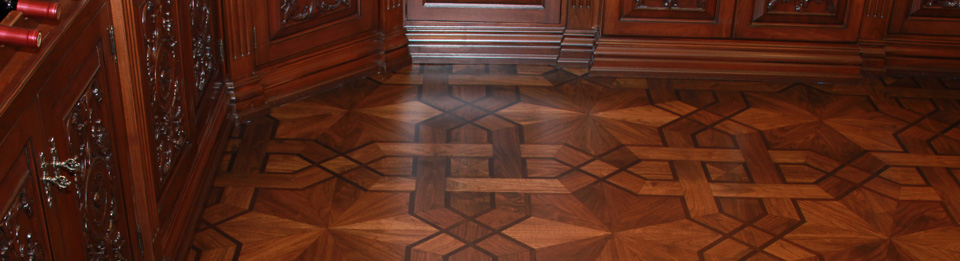
Victoria Reclaimed Parquet Flooring - European Chestnut with Ornamental Mosaic Inlay
Victoria pattern reclaimed parquet flooring represents the pinnacle of decorative wood flooring artistry—intricate geometric designs combining authentic reclaimed European chestnut wood with complementary mosaic tile inlay creating ornamental patterns that transform floors into genuine works of Old World craftsmanship. This distinctive parquet style features carefully orchestrated wood and tile combinations arranged in sophisticated geometric configurations reminiscent of Victorian-era palace floors, European manor houses, and formal estate spaces where flooring served as artistic expression rather than mere function. Victoria parquet elevates interiors through visual drama, historical authenticity, and artisan craftsmanship impossible to achieve with standard strip flooring or simple geometric parquet patterns.
The Victoria parquet pattern distinguishes itself through complexity and material diversity—unlike single-wood parquet designs (herringbone, chevron, basket weave) that rely purely on wood grain direction for visual interest, Victoria parquet incorporates multiple materials creating texture, color, and pattern contrast. Our Victoria patterns typically feature reclaimed European chestnut as the primary wood component selected for its warm honey-brown coloring, straight fine grain texture, and historical European provenance matching the pattern's Old World aesthetic. Complementing the chestnut are mosaic tile elements in stone, marble, ceramic, or porcelain featuring colors coordinated to enhance the wood tones—cream and beige tiles echo light sapwood, darker brown tiles harmonize with aged heartwood, occasional accent colors in terra cotta or slate blue add sophisticated visual punctuation.
Understanding Victoria Parquet Pattern Design
The Victoria pattern encompasses various geometric configurations united by ornamental sophistication and wood-tile integration:
Medallion and Rosette Centers: Many Victoria installations feature central medallions or rosettes where wood pieces radiate outward from tile mosaic centers creating focal points. These medallions range from 24-inch to 60-inch diameter circles or octagonal forms incorporating dozens to hundreds of individual wood and tile pieces precision-cut and arranged in concentric rings. The reclaimed chestnut provides warm wooden radiating bands while tile segments create contrast rings—alternating patterns of wood, cream tile, wood, darker tile building visual complexity. Medallions install in foyer centers, great room focal points, or dining room locations where they command attention as flooring's centerpiece.
Border and Field Combinations: Victoria patterns excel as elaborate borders surrounding simpler field floors. A reclaimed chestnut plank field might be framed by 12-inch to 24-inch Victoria borders featuring geometric wood-and-tile patterns creating defined room perimeters. These borders can incorporate Greek key patterns, running bond designs with tile accents, diagonal wood strips separated by tile spacers, or basketweave variations with tile corner blocks. Border applications allow Victoria pattern's visual richness to frame spaces without covering entire floors—providing impact while controlling costs and installation complexity.
All-Over Geometric Repeat Patterns: For dramatic full-room installations, Victoria patterns can repeat across entire floor areas. These configurations arrange reclaimed chestnut pieces in squares, diamonds, or hexagonal frames with tile mosaic centers filling each wood-defined cell. A common design features 12-inch chestnut squares creating grid patterns with 4-inch mosaic tile centers—alternating tile colors create checkerboard effects while the chestnut framing unifies the composition. All-over Victoria installations deliver maximum visual impact transforming entire floors into decorative art.
Stair Risers and Accent Applications: Victoria patterns work beautifully in vertical applications where decorative impact matters more than foot traffic durability. Stair risers featuring Victoria wood-and-tile designs create stunning focal points in entry staircases. Fireplace hearth surrounds, raised platform perimeters, and threshold transitions between rooms can incorporate Victoria patterns as accent elements adding visual interest to transitional spaces.
Reclaimed European Chestnut in Victoria Patterns
European chestnut (Castanea sativa) provides ideal characteristics for Victoria parquet:
Warm Honey-Brown Color: European chestnut displays rich warm honey to golden-brown heartwood with lighter tan sapwood creating natural color variation perfect for Old World parquet aesthetics. This warm coloring provides inviting appearance while complementing cream, beige, and brown tile choices commonly used in Victoria patterns. The wood's natural aging patina from reclaimed sources deepens color richness adding authentic historical character to the patterns.
Straight, Fine Grain Texture: Unlike oak's prominent open grain or hickory's dramatic color variation, European chestnut features relatively straight, fine grain texture creating refined appearance that doesn't compete visually with the geometric pattern itself. In parquet applications where pattern geometry is the primary visual element, chestnut's subtle grain serves as supporting texture rather than competing focal point—the wood complements the design rather than overwhelming it.
Stability and Workability: Chestnut's moderate density (Janka 540-650 depending on growth conditions) machines cleanly allowing precision cutting required for intricate parquet patterns. The wood's dimensional stability performs well in parquet applications where multiple wood grain directions meet—critical for preventing buckling or gapping in complex geometric designs. Chestnut accepts finish evenly maintaining uniform appearance across pattern elements.
European Provenance and Historical Authenticity: Using reclaimed European chestnut connects Victoria parquet to genuine European craftsmanship traditions. Victorian-era European manor houses and palaces featured parquet extensively—selecting reclaimed European wood species maintains historical authenticity matching the pattern's Old World origins. This provenance matters for high-end residential and hospitality applications where authentic materials support design narratives.
Alternative wood species can be incorporated in Victoria patterns—reclaimed walnut provides dark contrast, reclaimed oak offers American traditional character, reclaimed maple contributes light blonde tones. Many Victoria installations intentionally mix multiple reclaimed species creating color and texture variation enhancing pattern complexity.
Mosaic Tile Options for Victoria Parquet
Tile selection dramatically influences Victoria pattern appearance:
Natural Stone Mosaic Tiles: Marble, travertine, limestone, and slate cut into small mosaic pieces (typically 1-inch to 4-inch sizes) provide authentic Old World materials matching historical European parquet traditions. Cream and beige marbles complement chestnut's warm tones creating harmonious palettes. Darker grey or brown stones provide contrast elements. Natural stone adds material luxury and tactile variation—the cool smooth tile surface contrasts texturally with warm wood grain. Stone mosaics install permanently (unlike wood which can be sanded and refinished) requiring careful planning since they cannot be altered after installation.
Porcelain and Ceramic Mosaic Tiles: Modern tile manufacturing allows virtually unlimited color, size, and finish options. Porcelain mosaics can replicate natural stone appearance while offering superior durability, stain resistance, and moisture impermeability. Ceramic tiles enable custom colors matching specific design palettes impossible with natural materials. These engineered tiles typically cost 40-60% less than natural stone while providing consistent sizing and color—beneficial for precision parquet patterns requiring exact dimensional tolerances.
Glass Mosaic Accents: Contemporary Victoria interpretations occasionally incorporate glass mosaic tiles adding shimmer and light reflection. Subtle frosted or translucent glass in cream or amber tones can echo wood colors while adding luminous quality. Glass works best as accent elements (5-10% of tile area) rather than primary tile material—too much glass can appear overly contemporary conflicting with parquet's traditional character.
Metallic Tile Elements: High-end Victoria installations may incorporate brass, bronze, or copper mosaic elements as luxury accent details. Metallic tiles catch light creating sparkle effects and adding warmth complementing wood tones. Metal elements are typically limited to key points in medallion centers or border corners where small quantities provide maximum visual impact without overwhelming the wood-and-stone composition.
Design Applications for Victoria Parquet
Where Victoria pattern excels:
Grand Foyers and Entrance Halls: The primary traditional application—Victoria medallions or elaborate border patterns in entry foyers create memorable first impressions communicating luxury and craftsmanship immediately upon entry. A 48-inch diameter Victoria medallion centered in a foyer surrounded by simpler plank flooring provides dramatic focal point without requiring the entire entry to be parquet. This concentrated design impact delivers maximum visual effect while controlling costs and installation complexity.
Formal Dining Rooms: Victorian-era European dining rooms traditionally featured elaborate parquet—Victoria patterns under dining tables continue this tradition. The geometric formality complements formal dining furniture while the pattern defines the dining zone within open-plan spaces. Victoria borders can frame the dining area creating visual separation without walls or physical barriers. The combination of reclaimed wood and tile provides durability under dining chairs which frequently slide across floors.
Solariums and Garden Rooms: Victoria parquet works exceptionally well in solariums, conservatories, and garden rooms where wood-and-tile combinations bridge between indoor refinement and outdoor materials. The tile elements handle moisture from plant watering better than all-wood floors while the reclaimed chestnut maintains warm residential character. These transitional spaces traditionally featured decorative flooring—Victoria patterns honor this heritage while providing practical moisture resistance through tile inclusion.
Master Suite Sitting Areas: Luxury master bedrooms often include sitting areas or retreat zones—Victoria parquet defining these areas creates visual luxury and spatial definition. A Victoria pattern "rug" framed by border designs delineates the sitting zone while complementing surrounding simpler hardwood. This application works particularly well in large master suites (500+ sq ft) where flooring variation adds visual interest preventing monotony across large continuous spaces.
Library and Study Floors: Traditional libraries and studies historically featured parquet flooring—Victoria patterns enhance these spaces with intellectual sophistication and Old World gravitas. The reclaimed materials and artisan craftsmanship align with libraries' scholarly character while the geometric patterns complement built-in bookcases, wood paneling, and traditional furnishings common in these rooms.
Boutique Hotel Lobbies and Restaurants: High-end hospitality spaces seeking distinctive character specify Victoria parquet for public areas. Restaurant entries featuring Victoria medallions create upscale ambiance, boutique hotel lobbies use Victoria borders to define seating zones, wine tasting rooms incorporate the patterns referencing European chateau aesthetics. In commercial applications, the tile elements provide practical durability in high-traffic zones while the reclaimed wood maintains warm, inviting residential feel balancing function and atmosphere.
Installation Considerations for Victoria Parquet
Victoria parquet installation requires specialized expertise:
Pre-Assembly vs. Field Installation: Complex Victoria patterns can be pre-assembled into panels at the workshop before site installation, or assembled piece-by-piece in the field. Pre-assembly allows more precise fitting in controlled workshop conditions, ensures pattern accuracy before installation, and reduces on-site labor time. Field assembly provides greater flexibility for custom sizing, allows patterns to precisely fit irregular room dimensions, and enables real-time design adjustments. Most installers prefer pre-assembling major elements (medallion centers) while field-installing borders and transitions adapting patterns to actual site conditions.
Subfloor Requirements: Victoria parquet demands exceptionally flat, stable subfloors—the combination of wood grain directions and rigid tile elements magnifies subfloor imperfections. Subfloors must be flat within 1/8 inch over 10 feet (stricter than standard hardwood's 3/16 inch tolerance). Concrete subfloors work well for glue-down Victoria installations providing the required flatness and stability. Wood subfloors must be properly reinforced preventing flex that could crack tile grout joints or dislodge parquet elements.
Moisture Barriers and Tile Setting: Tile elements require different installation materials than wood—thinset mortar for tile adhesion, grout for tile joints, sealers for stone protection. Wood components install using wood flooring adhesives or mechanical fasteners. Coordinating these different material systems requires installers experienced in both tile and hardwood methods. Moisture barriers must accommodate both materials' requirements—protecting wood from moisture while providing proper bonding surfaces for tile setting materials.
Expansion Gaps and Material Movement: Wood expands and contracts with humidity changes while tile remains dimensionally stable. Victoria patterns must account for this differential movement through strategic expansion gaps, flexible grout joints, and careful pattern design preventing wood expansion from cracking tiles. Perimeter expansion gaps (minimum 1/2 inch) allow wood movement without impacting rigid tile elements. In large installations, expansion joints may be required within the pattern itself preventing buckling or tile damage.
Professional Installation Requirement: Victoria parquet is not DIY-appropriate. Installation requires combined expertise in hardwood flooring, tile setting, pattern layout, and precision cutting. Expect installation costs of $25-45/sq ft for Victoria patterns compared to $10-18/sq ft for standard hardwood—the premium reflects specialized labor, time-intensive fitting, and dual-material coordination. For medallion installations, the medallion itself may cost $800-3,000 depending on size and complexity, plus installation labor.
Installation Methods
Glue-Down Installation: Primary method for Victoria parquet—both wood and tile elements adhere directly to subfloors using appropriate adhesives (wood flooring adhesive for chestnut, thinset mortar for tiles). Glue-down installation provides the solid, permanent attachment required for complex geometric patterns. The adhesive prevents individual pieces from shifting ensuring pattern integrity over decades.
Mechanical Fastening for Wood Components: In some Victoria applications, the primary reclaimed chestnut field installs using traditional nail-down methods with Victoria tile inlay elements glued into pre-cut openings. This hybrid approach uses standard hardwood installation techniques for the majority wood area while incorporating tile accents. The method works well for border applications where reclaimed plank fields receive Victoria tile-accent borders at perimeters.
Mesh-Backed Pre-Assembly: Modern Victoria fabricators sometimes mount complex patterns onto mesh backing creating large flexible panels that install similar to sheet vinyl or carpet tiles. The mesh holds wood and tile pieces in correct pattern relationships while allowing some flexibility for conforming to slightly irregular subfloors. After installation, mesh remains hidden beneath the pattern serving as permanent structural support.
Finishing and Maintenance
Reclaimed chestnut finishing: The wood components receive protective finish—typically oil-based polyurethane enhancing chestnut's warm honey tones or water-based polyurethane maintaining lighter natural color. Some designers prefer oil-rubbed finishes or hardwax oil for traditional matte appearance matching European parquet aesthetics. Finishing happens after installation allowing complete floor sanding to create perfectly flush transitions between wood and tile elements.
Tile Sealing: Natural stone tiles require sealing protecting against staining and moisture penetration. Impregnating sealers penetrate stone without altering appearance, enhancing sealers deepen stone color creating richer tones, and topical sealers create protective surface coatings. Porcelain and ceramic tiles are pre-sealed during manufacturing typically not requiring additional treatment.
Grout Maintenance: Tile grout joints require periodic sealing preventing moisture penetration and staining. Grout can be cleaned and refreshed over years using grout cleaning products or regrouting when deteriorated. Color-matched caulk at perimeter expansion joints allows wood movement without grout cracking.
Long-Term Care: Victoria parquet maintenance involves both hardwood and tile considerations—regular sweeping or vacuuming removes abrasive grit, damp mopping with pH-neutral cleaners maintains both materials, immediate spill cleanup prevents staining. The reclaimed chestnut can be refinished when wood areas show wear (after 20-40 years typically) though refinishing requires careful protection of tile elements which cannot be sanded. Tile areas maintain appearance indefinitely requiring only cleaning without refinishing.
Pricing and Value Considerations
Victoria parquet represents significant investment:
Material Costs: Expect $35-80/sq ft for custom Victoria parquet materials depending on complexity (simple borders vs. elaborate medallions), reclaimed wood species and quality, tile material choices (porcelain vs. marble), and pattern detail level. Pre-fabricated Victoria medallions from specialty suppliers range $800-4,000 for 36-48 inch diameter designs. Simple Victoria border strips cost $25-45/linear foot.
Installation Costs: Professional installation adds $25-50/sq ft reflecting specialized labor requirements, time-intensive fitting, and dual-material expertise needed. Complete Victoria pattern rooms typically cost $60-130/sq ft installed (material + labor). A foyer medallion installation might cost $2,500-6,000 total including medallion, surrounding field work, and labor.
Value Proposition: While expensive, Victoria parquet provides value through: permanent artistic flooring becoming property signature feature, authentic historical materials and craftsmanship impossible to replicate cheaply, dramatic visual impact justifying luxury positioning, and exceptional durability with tile elements lasting indefinitely and wood components refinishable. In luxury properties, distinctive Victoria parquet differentiates homes competitively and supports premium pricing.
Budget Alternatives: For clients wanting Victoria aesthetics at lower costs, consider: Victoria borders only with simpler plank fields (capturing impact while reducing coverage area), printed or stained faux-parquet patterns on standard wood flooring (achieving similar appearance without actual inlay), or smaller accent areas (stair risers, fireplace hearths) rather than full-room installations.
Comparing Victoria to Other Parquet Patterns
Victoria vs. Herringbone/Chevron Parquet: Herringbone and chevron use single wood species arranged in V-patterns—simpler, more affordable, and easier to install than Victoria. Victoria offers greater visual complexity through tile integration and ornamental design but costs 2-3x more than geometric wood-only patterns. Choose Victoria for statement luxury applications, herringbone for traditional elegance at moderate cost.
Victoria vs. Versailles Parquet: Versailles patterns feature elaborate geometric wood-only designs with multiple species creating color contrast through wood selection rather than tile inclusion. Both are highly decorative luxury options—Victoria typically incorporates tile for material variety, Versailles achieves complexity through wood alone. Versailles generally costs slightly less than Victoria due to single-material installation.
Victoria vs. Bordeaux/Monticello Patterns: These classic European parquet patterns use diagonal wood arrangements with contrasting borders—more complex than herringbone but less ornamental than Victoria. They provide middle ground between simple geometric patterns and elaborate inlay work. Victoria's tile elements make it more distinctive and typically more expensive than all-wood Bordeaux or Monticello designs.
Historical Context and Modern Interpretations
Victoria pattern parquet emerged during the Victorian era (1837-1901) when decorative floor arts reached elaborate pinnacles in European palace and estate construction. The Industrial Revolution enabled precision woodworking machinery making complex parquet economically feasible, while expanding global trade provided access to exotic hardwoods and marble from distant quarries. Victoria patterns represented wealth, sophistication, and cosmopolitan taste—incorporating materials and craftsmanship beyond ordinary homeowners' reach.
Modern Victoria interpretations maintain historical authenticity while incorporating contemporary materials and techniques. Using reclaimed European chestnut honors traditional species selections. Natural stone and handcrafted elements preserve artisan quality. However, contemporary versions may simplify patterns slightly for cost efficiency, use engineered materials improving durability, and adapt sizing to modern room proportions.
Request Samples and Custom Consultation
Given Victoria parquet's customization options and investment level, in-person consultation is highly recommended. Visit our showroom to review Victoria pattern samples, examine reclaimed European chestnut and tile options, discuss pattern customization for your specific spaces, and review installation details with experienced specialists.
Request samples of reclaimed European chestnut showing color and grain character, or request a custom project quote providing room dimensions, installation location details, and design preferences.
Call 213-792-5908 to schedule a design consultation discussing your Victoria parquet flooring project. Our team will help determine whether pre-fabricated medallions or fully custom field-assembled patterns best suit your needs, timeline, and budget.
Visit Our Showroom
See Victoria parquet samples and reclaimed European chestnut at our showroom: 9216 S. Vermont Ave, Los Angeles, CA 90044
Showroom Hours:
Monday - Friday: 8:00 AM - 5:00 PM
Saturday & Sunday: By Appointment
Call 213-792-5908 to schedule a Victoria parquet consultation.
Explore Expanded Options
Browse additional parquet patterns, wood species combinations, and custom color matching options not shown on this page.
View Full Gallery →