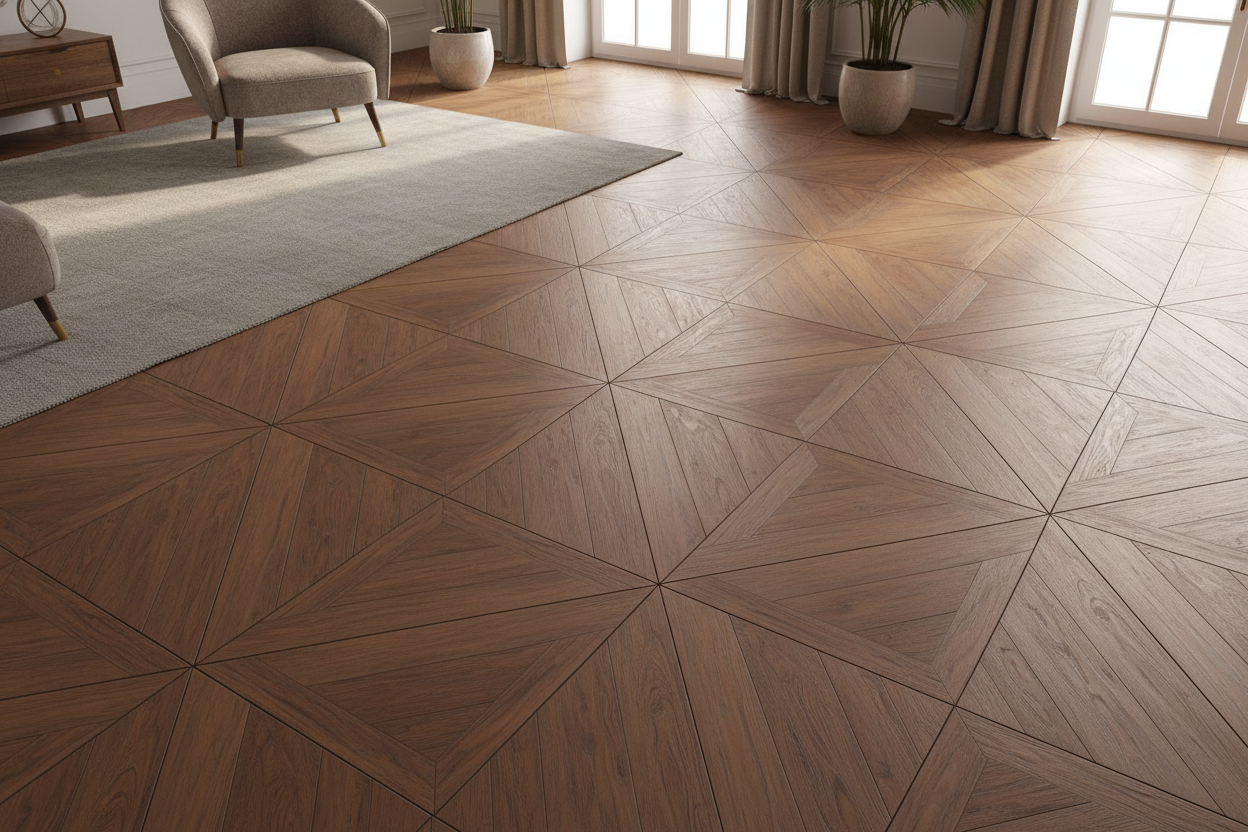
Reclaimed Lana/Marseille Parquet Flooring
Marseille custom wood parquet pattern will always provide beauty to your house. This is one of the most regarded wood patterns in the world, mainly used in foyers, living rooms, libraries and family rooms. When you want a beautiful house, a combination of this custom parquet pattern will reflect and enhance the beauty, style and design of your home.
The Marseille Pattern Heritage
The Marseille parquet pattern originated in southern France, where Mediterranean design sensibilities met European woodworking precision. Named after the historic port city of Marseille, this pattern reflects the region's appreciation for geometric harmony and artisanal craftsmanship. The design gained prominence in French manor houses during the 18th and 19th centuries, where it adorned the formal reception rooms of aristocratic estates.
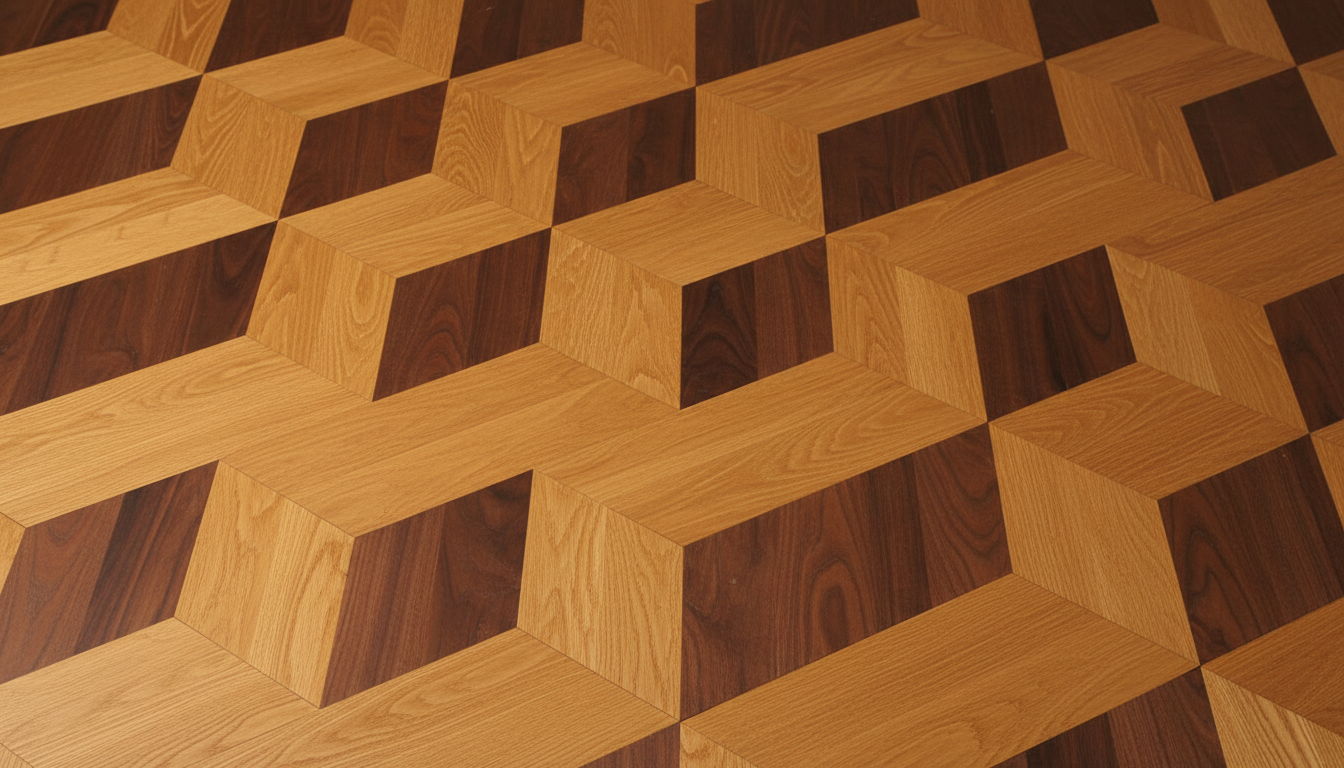
Traditional Marseille patterns feature interlocking geometric shapes—typically diamonds, rectangles, and triangles—arranged to create optical depth and visual rhythm. The interplay of light and shadow across the angled wood grain produces a dynamic surface that changes appearance throughout the day as natural light shifts. This living quality makes Marseille parquet more than flooring; it becomes an integral architectural element that responds to its environment.
Distinctive Design Characteristics
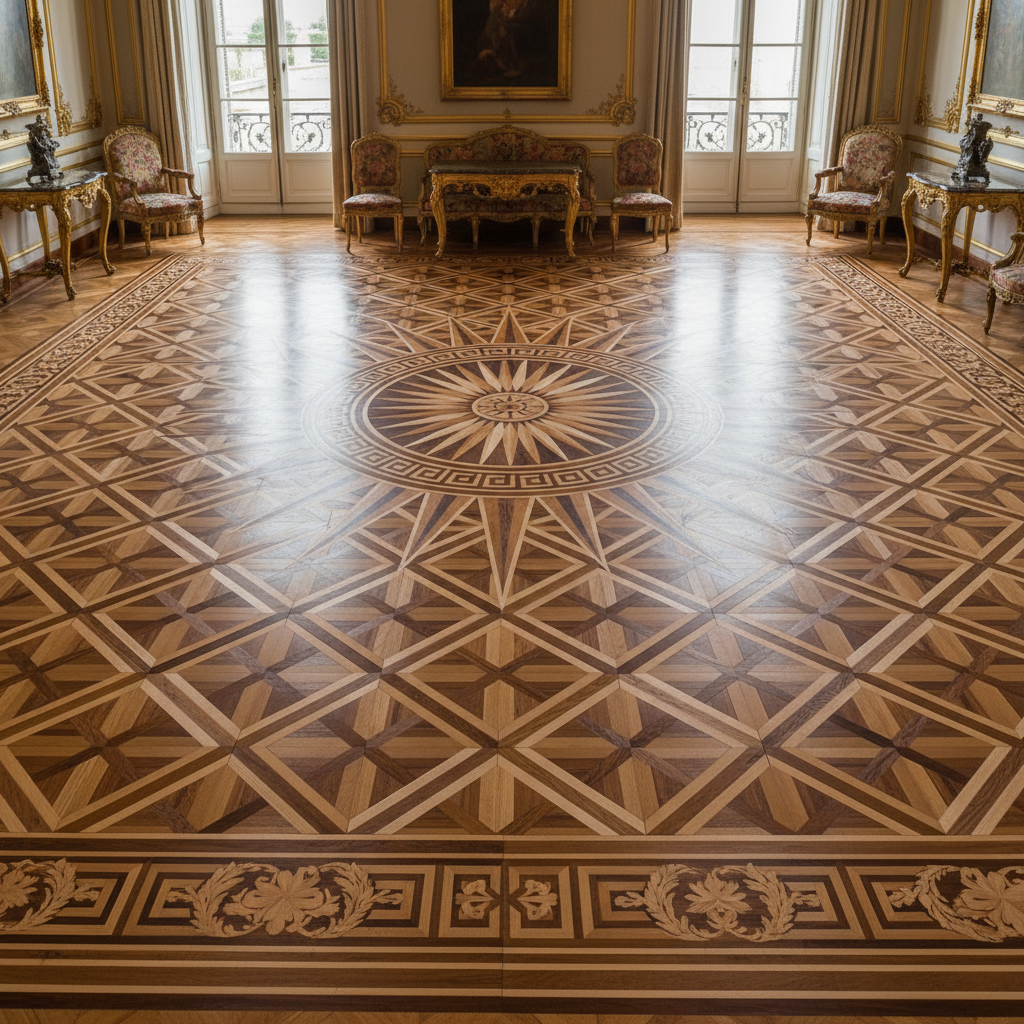
What sets Marseille parquet apart from simpler patterns is its balanced complexity. Unlike the straightforward repetition of herringbone or the elaborate ornamentation of palace parquet, Marseille achieves sophistication through proportional geometry. The pattern typically features a central motif—often a diamond or star configuration—surrounded by complementary border elements that frame and emphasize the core design.
The Lana variation of Marseille parquet introduces additional layering, with smaller geometric elements nested within larger frames. This creates a sense of depth and three-dimensionality that draws the eye inward. The pattern works equally well as a room-wide installation or as a central medallion surrounded by simpler flooring, making it versatile for different architectural contexts and budget considerations.
Wood Species for Marseille Patterns
Marseille parquet shines when executed in contrasting wood species that highlight the geometric precision of the design. The pattern's effectiveness depends on clear visual delineation between different elements, achieved through strategic species selection.
Walnut and White Oak: This classic combination pairs dark American black walnut (Janka hardness 1010) with lighter white oak (Janka 1360), creating high contrast that makes pattern elements stand out clearly. The walnut's chocolate-brown tones against oak's warm honey colors produce timeless elegance suitable for traditional and transitional interiors.
Red Oak and Hickory: For those seeking more color variation, red oak's pinkish-tan tones (Janka 1290) combine beautifully with hickory's cream-to-light-brown coloring (Janka 1820). This pairing offers moderate contrast with natural warmth, and hickory's exceptional hardness provides excellent durability in high-traffic areas.
Mesquite Wood: An unexpected choice bringing Southwestern character to a European pattern, mesquite (Janka 2345) features dramatic color variations from light golden browns to deep reddish-chocolates, often within the same board. Its extreme hardness and distinctive grain create Marseille patterns with rustic sophistication. Mesquite's natural oils contribute to dimensional stability, important in parquet where precise tolerances matter.
Douglas Fir: Though softer than hardwoods (Janka 620-710 depending on growth region), Douglas fir brings unique visual character with pronounced grain figuring and warm amber tones. In Marseille patterns, fir works well when combined with harder species that carry structural load, with fir elements positioned for visual impact rather than foot traffic durability. Reclaimed Douglas fir from old-growth sources offers tighter grain and greater stability than modern harvests.
Maple and Cherry: For lighter, more contemporary interpretations, hard maple (Janka 1450) paired with cherry (Janka 950) creates subtle yet distinct contrast. Maple's creamy white brightens spaces while cherry's reddish-brown tones deepen beautifully with age, developing rich patina over years.
Installation Methodology and Complexity
Installing Marseille parquet requires experienced craftsmen familiar with geometric pattern layouts. The installation process differs significantly from standard strip flooring, demanding precision at every stage.
Subfloor Preparation: The foundation must be absolutely flat, with variations not exceeding 1/8" over 10 feet. Any irregularities telegraph through thin parquet pieces, creating lippage where pattern elements meet. Professional installation typically involves grinding high spots and filling low areas with leveling compound, followed by moisture testing to ensure less than 3% moisture content difference between subfloor and wood.
Pattern Layout: Installers begin by finding room center points and establishing reference lines. For Marseille patterns with central medallions, the focal point must align precisely with room geometry—typically centered on fireplaces, doorways, or architectural features. Test layouts with actual pieces ensure pattern alignment before any adhesive application.
Piece Preparation: Each element requires precise cutting to specified angles and dimensions. Modern installations use CNC cutting for accuracy, though traditional hand-cutting remains preferred for custom or reclaimed work. Wood must be acclimated to installation environment for 7-14 days, preventing expansion or contraction after installation.
Adhesive Application: Flexible polyurethane adhesives designed specifically for parquet provide the best results, allowing slight movement as wood responds to humidity changes while maintaining strong bonds. Adhesive is troweled in small sections to prevent skinning, with each piece pressed firmly and checked for proper seating.
Sanding and Finishing: After adhesive cures (typically 24-48 hours), the floor undergoes multi-stage sanding. Initial passes with 40-60 grit remove high spots and level transitions between pieces. Progressive sanding through 80, 100, and 120 grits creates smooth surfaces ready for finish. The final 150-grit pass precedes staining (if desired) and finish application—typically 3-4 coats of oil-based polyurethane or professional-grade water-based finish.
Expect installation timelines of 3-7 days for average rooms (200-400 square feet), including prep, installation, drying time, and finishing. Installation costs range from $15-35 per square foot depending on pattern complexity, with custom designs commanding premium pricing.
Applications in Modern and Traditional Interiors
Foyers and Entry Halls: Marseille parquet makes ideal first impression flooring. The pattern's geometric sophistication sets a formal tone while demonstrating attention to detail and design sophistication. A central Marseille medallion surrounded by simpler parquet or hardwood planking creates focal point impact without overwhelming smaller entry spaces.
Living Rooms and Libraries: Formal living spaces benefit from Marseille's refined character. The pattern complements traditional furniture arrangements, oriental rugs, and classical architectural details. In libraries, the pattern's visual interest remains engaging without competing for attention with book collections and furnishings.
Family Rooms: Contemporary family rooms gain unexpected elegance from Marseille parquet, particularly when executed in lighter wood combinations or single-species variations where pattern emerges through grain direction rather than color contrast. This approach suits modern aesthetics while maintaining geometric interest.
Dining Rooms: The formality of Marseille parquet pairs naturally with dining room functions. The pattern defines the space beneath dining tables while remaining visible around room perimeters. Consider using the pattern to create a "dining area rug" effect within open-concept floor plans, delineating the dining zone without physical barriers.
Maintenance and Longevity
Marseille parquet, like all parquet patterns, requires attentive maintenance to preserve its beauty across decades. The thin wear layer—typically 1/8" to 3/16" for most parquet—limits refinishing opportunities compared to solid 3/4" hardwood flooring.
Daily Care: Soft-bristle brooms, microfiber dust mops, or vacuum cleaners with hardwood floor attachments remove abrasive dirt particles before they scratch finishes. Clean spills immediately using slightly damp cloths—never allow water to puddle on parquet surfaces.
Periodic Cleaning: Weekly damp mopping with pH-neutral hardwood floor cleaners maintains finishes without leaving dulling residue. Avoid oil soaps, wax-based products, steam cleaners, and wet mopping systems. These introduce excessive moisture or build residue that obscures wood's natural beauty.
Protective Measures: Felt pads under furniture legs prevent scratching and denting. Area rugs in high-traffic paths reduce wear, though ensure rug backings are non-staining (test in inconspicuous areas). Entry mats trap dirt and moisture before they reach wood surfaces. Maintain consistent humidity levels (35-55% year-round) to minimize wood movement that can cause joint separation.
Refinishing Considerations: Most Marseille parquet tolerates 1-2 complete refinishings over its lifetime. Professional assessment before refinishing determines remaining wear layer thickness. Partial screening and recoating every 3-5 years extends time between full refinishes, adding protective topcoats without sanding through wood.
Pricing Structure and Investment Value
Marseille parquet represents a mid-to-upper tier flooring investment, positioned between standard hardwood and elaborate palace parquet in both cost and visual impact.
Material Costs: Expect $18-40 per square foot for quality Marseille parquet materials, varying by wood species, reclaimed vs. new, and pattern complexity. Stock patterns in common species combinations (oak/walnut) start around $18-25/sq ft, while custom designs in exotic species can reach $40-60/sq ft or higher.
Installation Pricing: Professional installation adds $15-30 per square foot depending on pattern complexity, room configuration, and regional labor rates. Total installed costs typically range $33-70 per square foot for complete projects including subfloor prep, materials, installation, and finishing.
Long-Term Value: Quality parquet installations appreciate property values, particularly in homes with traditional or formal architectural styles. The uniqueness factor—relatively few homes feature custom parquet—creates differentiation in competitive real estate markets. Properly maintained Marseille parquet lasts 50-100+ years, offering excellent cost-per-year value.
True Local Pros - Expanded Hardwood Flooring Services
Looking for More Hardwood Flooring Options?
Visit True Local Pros for an expanded selection of hardwood flooring products and services not shown on this page:
- Contemporary Parquet Designs: Modern geometric patterns with updated color palettes and innovative species combinations
- Custom Color Matching: Professional staining services to achieve exact color specifications and match existing floors
- Wide Plank Alternatives: For those considering parquet but wanting simpler installation, explore wide plank options up to 12" wide
- Pattern Consultation: Work with design specialists to customize Marseille patterns for your specific space and aesthetic preferences
- Restoration Services: Expert restoration of historic parquet flooring preserving original character while improving durability
TrueLocalPros.com - Your source for premium hardwood flooring solutions
Comparing Marseille to Alternative Patterns
vs. Herringbone: Marseille offers greater visual complexity and formality compared to herringbone's straightforward zigzag. Herringbone costs less ($15-30/sq ft installed vs. $33-70), installs faster, and suits both contemporary and traditional spaces. Choose Marseille for formal traditional settings; herringbone for versatility and budget consciousness.
vs. Palace Parquet: Palace patterns exceed Marseille in ornamental detail and installation complexity. Where Marseille balances sophistication with practicality, palace parquet makes bold statements in grand spaces. Marseille suits standard-sized rooms (150-300 sq ft); palace parquet requires larger canvases (300+ sq ft) to display properly.
vs. Chevron: Chevron's continuous V-pattern creates modern elegance through simplicity. It costs similarly to Marseille ($20-40/sq ft installed) but achieves different aesthetics—linear and contemporary vs. geometric and traditional. Chevron extends spaces visually; Marseille creates central focal points.
Customization and Design Flexibility
One of Marseille parquet's greatest strengths is adaptability. The core geometric principles accommodate numerous interpretations, allowing customization while maintaining pattern integrity.
Scale Variations: Pattern elements can be enlarged for contemporary spaces or miniaturized for intricate traditional installations. Larger modules (18-24" repeats) suit modern aesthetics, while smaller repeats (8-12") create delicate traditional character.
Color Approaches: Beyond traditional contrasting species, consider tone-on-tone installations where single species creates patterns through grain direction changes. White oak cut and oriented to emphasize grain produces subtle yet distinct Marseille patterns perfect for contemporary minimalist interiors.
Border Integration: Add decorative borders framing Marseille central patterns, creating "area rug" effects or room-defining elements within open floor plans. Borders ranging from simple contrasting species bands to elaborate Greek key or rope patterns customize the overall design.
Working with Walter's Flooring
Our team brings decades of parquet experience to every Marseille installation. We guide clients through species selection, pattern customization, and realistic project timelines. Our process includes comprehensive consultations reviewing your space, architectural style, existing finishes, and design goals. We provide detailed material and installation quotes with no hidden costs. Our installation teams work efficiently while maintaining the precision parquet demands.
Contact Us for Marseille Parquet Consultation
Visit our Los Angeles showroom to see Marseille parquet samples in various wood combinations. Discuss your project with specialists who understand the technical and aesthetic aspects of pattern selection. Call (213) 792-5908 to schedule a consultation or request detailed project quotes.
View Our Complete Parquet Gallery
Explore dozens of parquet pattern samples, color combinations, and installation examples at True Local Pros.