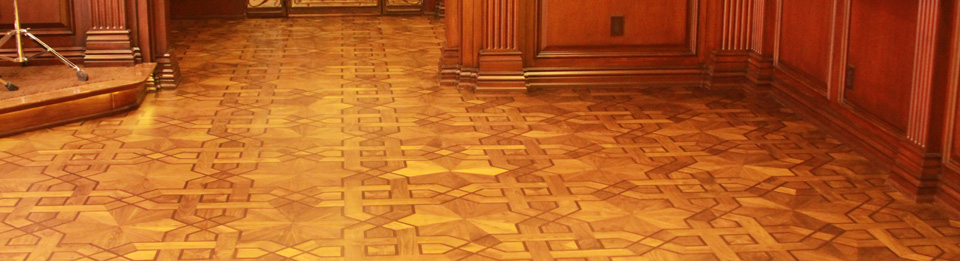
Rhomb Reclaimed Parquet Flooring - Geometric Diamond Pattern
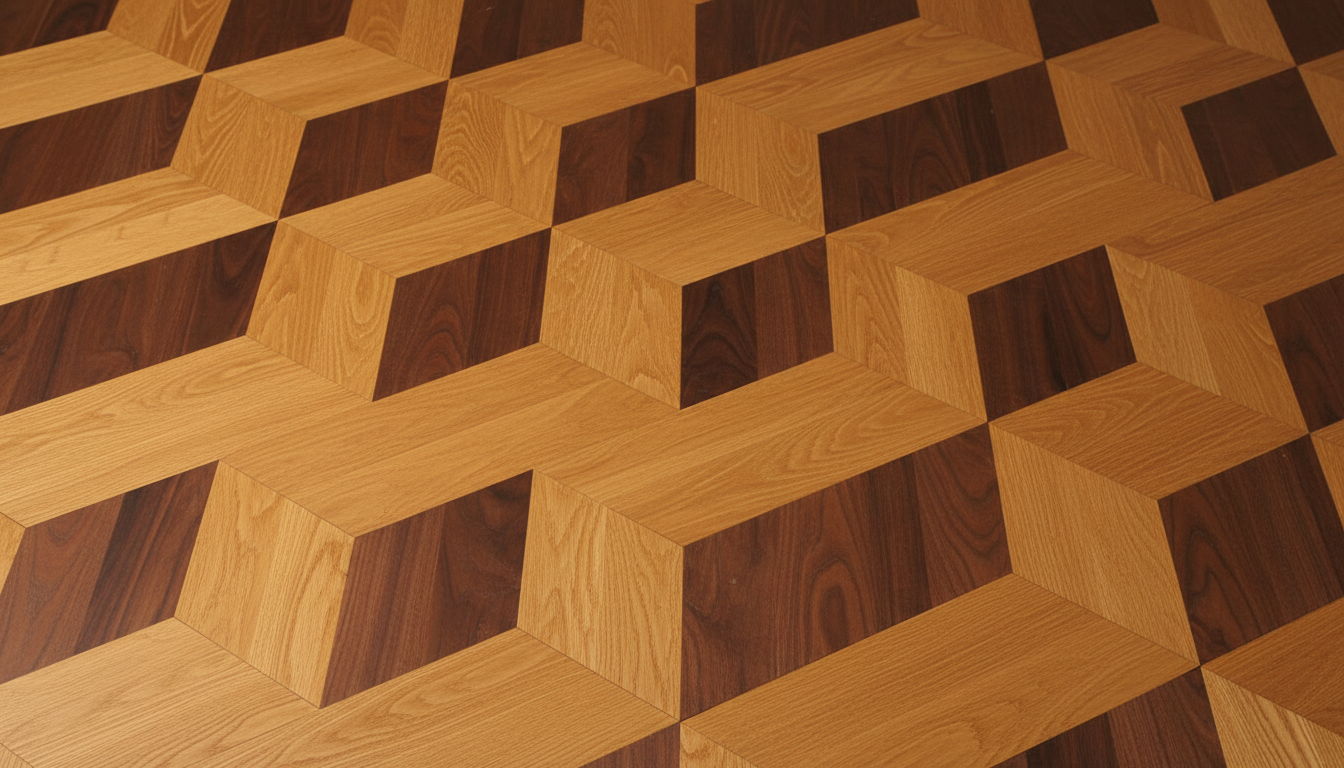
Rhomb pattern parquet flooring celebrates pure geometric form through repeating diamond (rhombus) shapes arranged in precise tessellated configurations creating visually dynamic floors that appeal to geometric-similarity enthusiasts and mathematically-inclined designers. The rhombus—a parallelogram with four equal-length sides but non-90-degree angles—generates distinctive diamond orientations that create directional flow, optical illusions of three-dimensional depth, and rhythmic pattern repetition across floor surfaces. This geometric parquet style offers exceptional design flexibility since rhombi tessellate in multiple configurations: simple diagonal grids, tumbling block patterns creating cube illusions, hexagonal cluster arrangements, or complex interlocking formations. Rhomb parquet demonstrates that geometric simplicity, when executed with precision craftsmanship and thoughtful species selection, produces sophisticated hardwood floors with timeless appeal and architectural presence.
The rhombus geometric foundation distinguishes this pattern from square-based parquets. While squares feature four 90-degree corners, rhombi have two acute angles (typically 60 degrees) and two obtuse angles (typically 120 degrees) creating elongated diamond shapes. This angular geometry enables three-dimensional visual effects impossible with squares—particularly the famous "tumbling blocks" or "cube" illusion where three rhombi meeting at a point create the appearance of isometric cube corners. Depending on wood species placement and grain orientation, these cubes can appear to project forward or recede backward creating dynamic architectural floors that seem to shift as viewers move through spaces. The pattern's mathematical precision appeals to those appreciating geometric similarity—the consistent rhombus shape repeating in perfect regularity across the entire floor demonstrating order, balance, and geometric harmony.
Understanding Rhomb Pattern Geometry
The rhomb parquet geometric system builds on fundamental principles:
60-120 Degree Rhombus Configuration: The classic rhomb parquet uses diamonds with 60-degree and 120-degree angles—these specific angles enable multiple tessellation patterns. Each rhombus typically measures 4-8 inches along each side creating diamonds 8-16 inches long (point to point on the long axis). The 60/120 angle relationship proves mathematically significant: three rhombi meeting at their 120-degree corners form perfect 360-degree circles (3 × 120 = 360), while six rhombi meeting at their 60-degree corners also complete 360 degrees (6 × 60 = 360). This mathematical compatibility enables seamless pattern repetition without gaps or overlaps.
Tumbling Blocks Three-Dimensional Illusion: The most famous rhomb arrangement creates cube illusions through strategic species placement. Three rhombi meet at a central point with their 120-degree corners converging. By using three different wood colors (light, medium, dark) or three grain orientations, the three diamonds visually resolve as three faces of an isometric cube—top, left side, right side. These apparent cubes repeat across the floor creating mesmerizing three-dimensional pattern despite perfectly flat surface. The illusion's strength depends on color/grain contrast—strong contrast creates obvious cubes, subtle variation produces more ambiguous shifting patterns.
Hexagonal Cluster Arrangements: Six rhombi arranged around a central hexagonal void create flower or star patterns. These hexagonal clusters tile seamlessly across floors creating different aesthetic than cube arrangements. Wood species can alternate (oak rhombi surrounding walnut hexagons, walnut rhombi surrounding oak hexagons) or grain directions can shift creating radiating vs. concentric patterns within each hexagonal cluster.
Linear Diagonal Patterns: Simplest rhomb arrangement aligns all diamonds in parallel rows at 45-degree diagonal to room walls. This creates strong directional pattern guiding eye movement diagonally across spaces. Species can alternate row-by-row (oak row, walnut row, oak row) or within rows (oak-walnut-oak-walnut) creating stripes or checkerboards rendered in diamond shapes rather than squares.
Wood Species Selection for Rhomb Parquet
Three-species combinations maximize rhomb pattern three-dimensional effects:
Light Species - White Oak or Maple: Serving as the lightest element in three-species cube patterns, white oak (honey-blonde) or maple (pale cream) typically represents cube tops—the upward-facing surfaces receiving most light. This light species placement reinforces the three-dimensional illusion since actual cubes would show their top surfaces brightest. Oak's Janka 1360 hardness and maple's 1450 provide durability appropriate for pattern floors enduring traffic.
Medium Species - Natural Cherry or Hickory: Medium-toned woods like natural cherry (warm reddish-brown) or hickory (tan with brown streaking) serve as intermediate value in three-species patterns, typically representing one cube side face. This middle value transitions between light tops and dark side faces creating graduated shading essential for convincing dimensional illusion. The medium species grounds the pattern preventing excessive light-dark contrast that could feel harsh.
Dark Species - Walnut or Mahogany: Walnut (chocolate brown) or mahogany (reddish-dark brown) provides the darkest element representing cube's shadowed side face. Placing dark wood in consistent orientation across all cube units (always the right-hand face, for example) establishes coherent lighting direction suggesting all cubes illuminated from same angle enhancing three-dimensional believability.
Two-Species Alternatives: Rhomb patterns using only two species (oak and walnut, maple and cherry) create less dramatic three-dimensional effects but still generate visual interest through color alternation, grain direction changes, or light/dark rhythm. Two-species patterns cost less than three-species while maintaining geometric sophistication. The pattern reads more as diamond tessellation than cube illusion.
Single-Species Variation: Using one wood species (typically oak) with grain direction as the variable element creates subtle rhomb patterns. Alternating grain orientation between adjacent diamonds (horizontal grain, vertical grain, diagonal grain) produces textural pattern visible through light reflection differences rather than color contrast. This monochromatic approach suits contemporary aesthetics preferring material consistency with subtle variation.
Historical Context and Artistic Associations
Rhomb parquet patterns, particularly tumbling blocks configurations, gained prominence during the Arts and Crafts movement (1880-1920) when designers explored geometric abstraction as artistic expression. The cube illusion fascinated early 20th century designers combining mathematical precision with visual trickery—floors that appeared three-dimensional despite flat reality appealed to Modernist sensibilities appreciating honest materials deployed in intellectually engaging ways.
The tumbling blocks pattern has ancient precedents in tile work—Islamic geometric tile patterns, Roman mosaic floors, and Renaissance marble inlay all explored cubic tessellations. Using wood parquet to achieve effects previously limited to tile or stone represented 19th/20th century innovation making geometric sophistication accessible through more affordable domestic hardwood materials.
M.C. Escher's famous geometric artworks featuring impossible cubes, tessellations, and perspective illusions renewed interest in geometric floor patterns mid-20th century. Designers and architects influenced by Escher incorporated tumbling block floors in modernist homes, museums, and public buildings where the patterns provided visual interest without figurative ornament—pure geometry as decoration aligned with Modernist aesthetic principles.
Design Applications for Rhomb Parquet
Where rhomb patterns excel:
Modern/Contemporary Interiors: Unlike ornate Victorian parquets, rhomb patterns' geometric clarity suits contemporary design aesthetics. The mathematical precision and optical illusion elements appeal to modern sensibilities appreciating intellectual engagement with materials and forms. Tumbling block floors in minimalist interiors provide visual complexity preventing sterile appearance while maintaining modern geometric language.
Arts and Crafts Style Homes: Craftsman and bungalow-style homes benefit from rhomb parquet's geometric honesty and visible craftsmanship. The pattern demonstrates woodworking skill and material knowledge—values central to Arts and Crafts philosophy. Using domestic hardwoods in rhomb patterns (oak, cherry, maple) aligns with Arts and Crafts preference for local materials over exotic imports.
Gallery and Museum Spaces: Art galleries and museums occasionally use rhomb parquet as intentional conversation between floor pattern and displayed artwork. The geometric abstraction complements modern art without competing for attention. The three-dimensional illusion can create interesting dialogue with sculpture or installation art exploring similar perceptual themes.
Study and Library Floors: Rhomb patterns work well in intellectual spaces like studies, libraries, or home offices where the geometric complexity provides visual interest during contemplative activities. The pattern's mathematical foundations appeal to analytically-minded individuals appreciating order and precision in their environments.
Retail and Hospitality Accent Zones: Upscale retail boutiques or hotel lobbies use rhomb parquet in defined accent areas—checkout zones, seating areas, or architectural focal points. The pattern's distinctiveness creates memorable spaces while its durability handles commercial traffic. The three-dimensional illusion provides subtle surprise element engaging visitors.
Game Rooms and Recreation Spaces: The playful optical illusion quality makes rhomb patterns particularly suitable for game rooms, billiard rooms, or recreational spaces where visual interest and conversation-starting design elements enhance social function. The geometric complexity provides sophisticated alternative to overly casual recreation space treatments.
Installation Methods and Considerations
Rhomb parquet installation presents unique challenges:
Pre-Fabricated Panel Systems: Modern rhomb parquet typically comes as factory-assembled panels containing multiple rhombi in set configurations. Common formats include 18x18 or 24x24 inch panels with six to twelve rhombi arranged in tumbling block patterns. These panels install via adhesive on flat subfloors. Factory assembly ensures accurate 60/120-degree angles and proper species alignment for three-dimensional effects—critical precision difficult to achieve in field installation.
Angle Cutting Precision: Unlike square parquets requiring only 90-degree and 45-degree cuts (achievable with standard miter saws), rhombi demand 60-degree and 30-degree angle cuts. These less-common angles require careful saw setup and verification. Even 1-degree angle error accumulates across multiple pieces causing gaps or overlaps disrupting pattern geometry. Professional shops use computer-controlled cutting equipment ensuring consistent accuracy.
Grain Direction Strategy: In single or two-species rhomb patterns, grain orientation becomes critical design element. Grain can run parallel to rhombus long axis (point-to-point), short axis (side-to-side), or diagonally. Consistent grain orientation across all rhombi creates unified appearance; alternating grain directions enhances pattern definition. Three-dimensional cube patterns often assign specific grain directions to each species reinforcing the illusion (vertical grain on cube tops, horizontal on sides).
Pattern Layout and Room Geometry: Rhomb patterns have inherent directionality unlike non-directional patterns like basket weave. The tumbling blocks pattern typically orients in one primary direction—cubes appearing to march across the floor at specific angle. Installers must plan this directionality relative to room architecture, entry points, and viewing angles ensuring the pattern enhances rather than conflicts with spatial experience.
Border Solutions: Rhomb patterns create irregular perimeters requiring border treatments. Common approaches include: angled border strips cut to match rhombus angles creating flush transitions, contrasting species borders in herringbone or basketweave patterns, or simplified solid wood borders 4-8 inches wide framing the rhomb field. Borders must be precisely fit preventing awkward partial diamonds at room edges.
Finishing and Long-Term Care
Finishing rhomb parquet: After installation, floors are sanded flat ensuring level transitions between species and panels. The multi-directional grain orientations in rhomb patterns require careful sanding—sanding parallel to one diamond's grain runs perpendicular or diagonal to adjacent diamonds risking tear-out if too aggressive. Professional finishers use progression of fine-grit sandpapers with light pressure maintaining smooth surface across all grain directions.
Finish choice dramatically affects three-dimensional illusion strength. Water-based polyurethane maintains original species colors maximizing light/medium/dark contrast for strongest cube effects. Oil-based polyurethane ambers all species reducing contrast slightly while creating warm unified tone. Sheen level matters too—high-gloss finishes create strong light reflection differences between grain directions enhancing pattern visibility; matte finishes provide subtler appearance.
Maintenance considerations: The multi-species composition requires attention during refinishing. Different species sand at different rates—softer woods (cherry, walnut) remove material faster than harder woods (maple, hickory) risking uneven surface if sanding too aggressively. Professional refinishing uses light touch maintaining level surface across all species. The geometric pattern makes scratches and wear less visible than in plain strip floors—pattern complexity camouflages minor imperfections.
Pricing and Value Proposition
Rhomb parquet pricing reflects geometric complexity:
Material Costs: Two-species rhomb panels cost $32-50/sq ft; three-species patterns cost $40-65/sq ft. Custom field-assembled rhomb parquet (rare due to installation complexity) costs $55-95/sq ft in materials. Price variation reflects wood species choices (oak/walnut costs less than exotic combinations), panel size, and pattern complexity.
Installation Costs: Professional installation costs $16-30/sq ft for pre-fabricated panels including subfloor prep, adhesive, and finishing. Total installed costs range $48-80/sq ft for two-species patterns, $56-95/sq ft for three-species tumbling block patterns.
Project Budgets: A 200 sq ft room in rhomb parquet costs $9,600-16,000 for two-species patterns or $11,200-19,000 for three-species tumbling blocks. This positions rhomb parquet as premium specialty flooring rather than whole-house standard treatment. Most projects use rhomb patterns in focal areas (entries, dining rooms, studies) with simpler flooring in secondary spaces controlling costs.
Value Considerations: Rhomb parquet provides value through: distinctive geometric floors creating architectural interest, three-dimensional illusion engaging viewers intellectually, multi-directional grain distributing wear evenly, refinishing potential allowing 50-100+ year lifespan, and unique character differentiating spaces from conventional flooring.
Customization and Contemporary Variations
Modern designers adapt rhomb patterns through:
Oversized Rhombi: Enlarging diamond dimensions to 12-16 inch sides (rather than traditional 4-8 inches) creates bold contemporary impact suitable for large modern spaces. Oversized patterns reduce visual complexity while maintaining geometric interest.
Mixed Material Integration: Some luxury installations combine wood rhombi with stone, metal, or resin elements. Wood cubes might alternate with stone cubes, or metal inlay strips could outline each rhombus. These material combinations add textural variety while maintaining geometric structure.
Color-Stained Single Species: Using one wood species (oak) stained in three colors (natural, medium walnut, dark espresso) creates tumbling block illusion through staining rather than different woods. This approach ensures uniform wood characteristics while providing color variation for pattern definition.
Perspective Distortion Patterns: Advanced rhomb patterns intentionally distort rhombus dimensions across the floor creating forced-perspective illusions—cubes appearing to recede toward room corners or architectural features. These artistic explorations push geometric parquet into custom installation art territory.
Request Samples and Consultation
Given rhomb parquet's geometric complexity and visual impact, professional consultation is recommended. Visit our showroom to examine tumbling block samples in various species combinations, discuss pattern scale and orientation for your specific space, and review installation approaches.
Request samples showing two and three-species rhomb configurations, or request a detailed project quote providing room dimensions and preferred pattern type.
Call 213-792-5908 to schedule a rhomb parquet consultation. Our team will help you select species combinations and pattern configurations creating geometric floors matching your design vision.
Visit Our Showroom
See rhomb parquet samples and tumbling block demonstrations at our showroom: 9216 S. Vermont Ave, Los Angeles, CA 90044
Showroom Hours:
Monday - Friday: 8:00 AM - 5:00 PM
Saturday & Sunday: By Appointment
Call 213-792-5908 to schedule your rhomb parquet flooring consultation.
Explore Expanded Options
Browse additional rhomb variations, cube patterns, and custom geometric designs not shown on this page.
View Full Gallery →