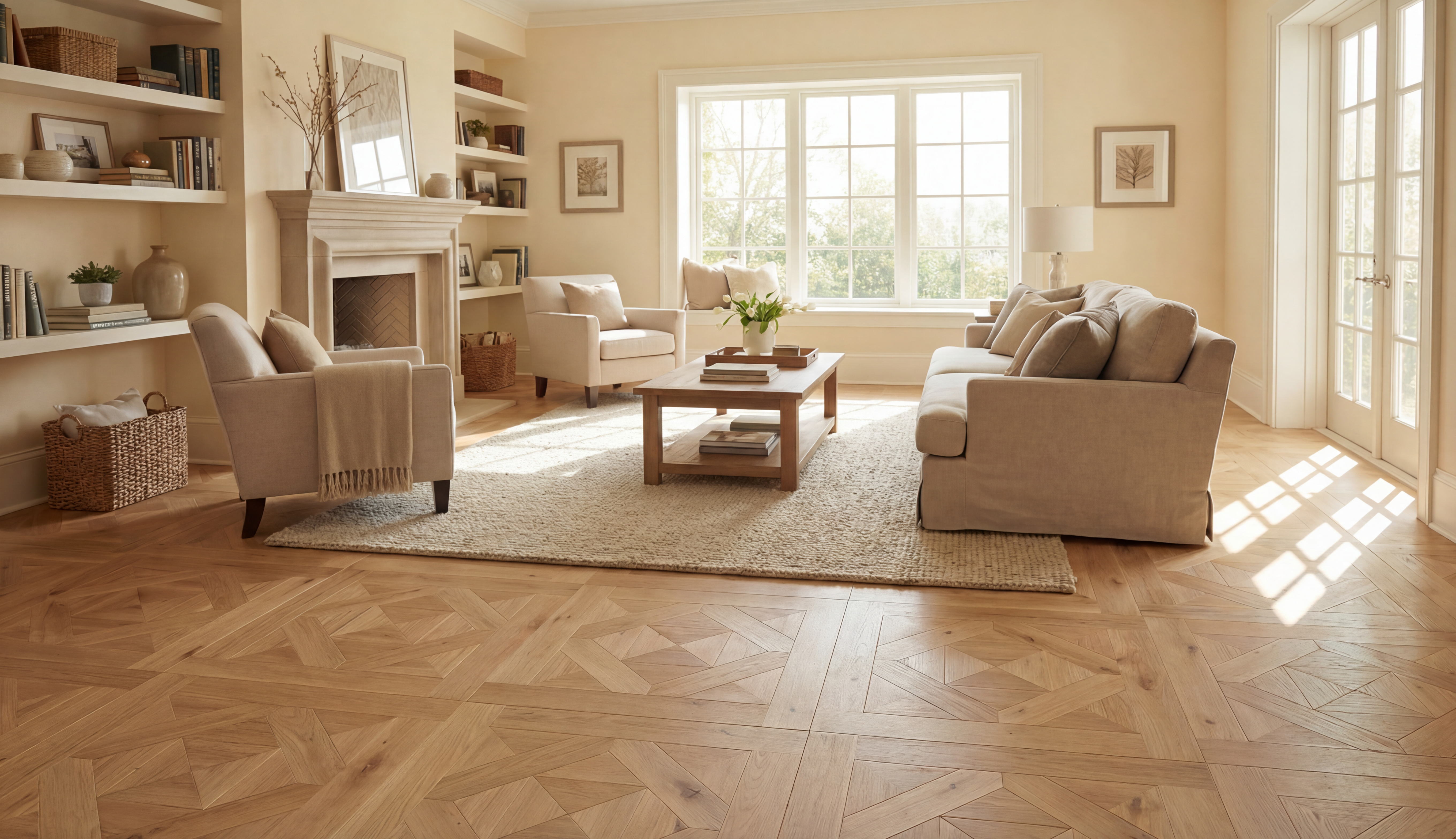
Gothic Parquet Flooring - Three-Dimensional Square-Within-Square Design
Gothic parquet flooring represents one of the most architecturally complex traditional wood flooring patterns utilizing precisely cut trapezoids, triangles, and squares arranged within trapezoidal frames creating dramatic three-dimensional square-within-square optical illusions. This geometric pattern achieves remarkable visual depth through careful piece orientation and dimensional accuracy transforming flat floor surfaces into perceived sculptural reliefs captivating viewers through mathematical precision and artistic composition inspired by medieval cathedral floors and Gothic architectural traditions spanning centuries.
Understanding Gothic Pattern Design Characteristics
Gothic parquet construction begins with precise geometric planning establishing modular square units typically measuring 12 to 18 inches per side. Each module contains an outer trapezoidal frame constructed from four precisely mitered trapezoid pieces forming the perimeter boundary. Within this frame, smaller trapezoids and triangular pieces arrange in carefully calculated orientations creating the characteristic square-within-square illusion appearing to recede into the floor surface or project outward depending on viewing angle and lighting conditions.
The three-dimensional optical effect results from precise piece orientation and careful color selection between frame and interior components. Darker outer frames surrounding lighter interior pieces create the impression of depth and recession. Reversing this relationship with light frames and dark interiors produces opposite visual effects appearing to rise from floor surfaces. These perceptual manipulations transform two-dimensional wood surfaces into dynamic architectural elements engaging viewers through geometric sophistication rarely achieved through conventional flooring materials.
Dimensional accuracy proves critical for successful Gothic pattern execution. Trapezoid pieces require exact angle cutting ensuring tight joints and proper geometric relationships throughout module assemblies. Even minor dimensional variations accumulate across multiple pieces disrupting the precise symmetry essential for achieving convincing three-dimensional illusions. Computer-controlled cutting equipment delivers the accuracy necessary for consistent production though historically these patterns were executed entirely by hand through painstaking manual craftsmanship.
Module orientation within overall floor layouts creates additional design opportunities. Standard perpendicular alignment produces formal grid organizations emphasizing geometric regularity. Diagonal module placement rotates the entire pattern 45 degrees creating dynamic visual movement across floor surfaces. Border treatments typically employ contrasting patterns or solid wood frames establishing clear boundaries between Gothic pattern fields and surrounding architectural elements.
Historical Origins and Medieval Cathedral Traditions
Gothic parquet patterns derive direct inspiration from medieval European cathedral floor traditions where skilled craftsmen created elaborate geometric compositions in stone and marble celebrating mathematical precision and spiritual symbolism through architectural ornamentation. These floor patterns communicated religious narratives and philosophical concepts through geometric language accessible to literate and illiterate congregations alike establishing floors as significant artistic statements rather than mere functional surfaces.
The transfer of Gothic geometric traditions from stone to wood flooring occurred during the Renaissance as wealthy European households sought to incorporate cathedral architectural sophistication into private residential spaces. Wood parquet offered practical advantages over stone including improved thermal insulation, acoustic dampening, and structural flexibility suitable for residential floor construction. Skilled woodworkers adapted stone pattern geometries to wood working techniques developing construction methods still employed in contemporary parquet manufacturing.
French and Italian craftsmen particularly excelled in Gothic parquet production during the 17th and 18th centuries creating remarkable installations throughout European palaces, manor houses, and institutional buildings. These historic floors demonstrate extraordinary precision and durability with many examples surviving centuries of use maintaining geometric accuracy and structural integrity despite minimal modern maintenance capabilities. Contemporary restoration projects studying these antique installations provide valuable insights into traditional construction methods and material specifications.
The pattern name "Gothic" reflects medieval architectural associations though geometric traditions actually predate Gothic period architecture by centuries. Islamic geometric traditions, Classical Greek mathematics, and even ancient Egyptian design principles all contributed to the geometric knowledge base informing Gothic parquet development. The term primarily serves as convenient shorthand identifying the characteristic square-within-square geometry rather than strict historical accuracy regarding pattern origins.
Wood Species Selection for Gothic Patterns
Wood species selection for Gothic parquet balances aesthetic objectives with technical performance requirements creating installations optimized for specific applications and design intentions. The pattern's geometric complexity and optical illusion effects demand careful attention to color relationships, grain figure, and dimensional stability ensuring finished installations achieve intended visual impacts while delivering reliable long-term performance.
White oak and European oak provide traditional foundation species for Gothic parquet installations. White oak delivers moderate brown coloring with subtle grain variations and exceptional hardness (Janka 1360) ensuring durability in demanding residential and commercial applications. European oak offers slightly tighter grain patterns with more uniform color distribution particularly valuable for geometric patterns where excessive figure variation could disrupt careful pattern organization. Both species accept stains readily enabling custom color development beyond natural wood tones when specific design requirements dictate.
Walnut serves as classic dark species for Gothic parquet frame components creating strong contrast against lighter interior pieces. American black walnut provides rich chocolate brown coloring with attractive grain figure and moderate hardness (Janka 1010) adequate for most residential applications. The species' distinctive color deepens with age and light exposure developing complex patina enhancing Gothic pattern depth perception over time. Walnut's natural oils provide modest moisture resistance though regular maintenance remains essential for long-term preservation.
Hard maple delivers pale neutral background tones ideal for Gothic pattern interior components contrasting with darker frame species. The wood's fine uniform grain and exceptional hardness (Janka 1450) make it premium choice for high-traffic commercial installations where durability proves paramount. Maple's light coloring accepts stains readily though natural tones often prove sufficient for achieving desired contrast effects within multispecies Gothic compositions.
Exotic species including mahogany, teak, wenge, and various South American and African hardwoods expand color palette possibilities beyond domestic species capabilities. These materials deliver unique colors ranging from pale yellow through orange, red, purple, and near-black tones enabling complex multicolor compositions impossible achieving through conventional domestic species. Extreme hardness characteristics typical of many tropical species ensure exceptional durability justifying premium material costs in demanding applications requiring maximum performance longevity.
Pattern Layout and Installation Precision Requirements
Gothic parquet installation demands exceptional precision and careful planning ensuring geometric accuracy and visual consistency throughout entire floor surfaces. The pattern's mathematical foundation permits no tolerance for dimensional errors or sloppy workmanship making professional installation essential for achieving quality results justifying premium material investments.
Subfloor preparation establishes critical foundation for successful Gothic pattern installation. Floors require absolute flatness within 1/8 inch variation over 10-foot spans measured in multiple directions. Any substrate irregularities telegraph through installed parquet causing visible surface undulations disrupting geometric pattern organization and potentially compromising adhesive bonding. Concrete subfloors typically require professional grinding and leveling compound application achieving specified flatness tolerances. Wood subfloors demand structural reinforcement eliminating all deflection and movement potentially stressing parquet assemblies.
Layout planning requires comprehensive full-scale drawings or digital modeling establishing precise module positions throughout entire room areas. Gothic patterns demand symmetrical organization centering on primary sight lines and architectural features. Misaligned patterns appearing off-center relative to doorways, windows, or room geometries create immediate visual discomfort undermining the pattern's sophisticated aesthetic regardless of installation quality execution. Professional installers invest substantial time in layout planning before placing any material ensuring final results meet exacting design standards.
Adhesive selection balances working time requirements with ultimate bond strength and flexibility characteristics. Modern urethane adhesives provide excellent performance with moisture resistance and limited flexibility accommodating minor wood movement from seasonal humidity variations. Traditional mastic products offer easier working properties and proven performance in climate-controlled residential environments. Adhesive trowel size requires careful specification ensuring adequate coverage without excessive squeeze-through potentially staining visible surfaces or creating cleanup difficulties.
Module installation proceeds systematically from established reference points maintaining constant attention to geometric accuracy and pattern alignment. Installers verify dimensional accuracy after every few modules checking diagonal measurements and ensuring consistent joint spacing throughout. This continuous quality control identifies potential problems early enabling corrections before adhesive sets permanently. Professional Gothic pattern installation typically proceeds at roughly one-quarter the rate of conventional wood flooring reflecting the exceptional precision and care required for quality results.
Design Applications and Architectural Integration
Gothic parquet suits specific residential and commercial applications where architectural sophistication and geometric complexity create desired atmospheric qualities supporting overall design intentions. The pattern's visual complexity and historical associations make it particularly appropriate for formal spaces demanding refined aesthetic character and cultural references to European architectural traditions.
Grand entry foyers in luxury residential properties utilize Gothic parquet establishing immediate design quality expectations for entire homes. The pattern's three-dimensional geometry creates memorable first impressions communicating homeowner commitment to architectural excellence and attention to detail. Large-scale foyer installations measuring 20 to 30 feet across showcase Gothic pattern complexity allowing the geometric composition to achieve full visual impact impossible in smaller constrained spaces.
Library and study environments benefit from Gothic parquet's intellectual architectural character and historical associations with European scholarly traditions. The pattern's geometric sophistication complements book collections and traditional furnishings creating coherent aesthetic environments supporting concentrated thought and serious discourse. Darker wood selections in walnut or mahogany reinforce traditional library character while lighter oak treatments create updated contemporary interpretations maintaining pattern integrity while avoiding excessive formality.
Museum galleries and institutional spaces employ Gothic parquet creating distinctive architectural character appropriate for cultural facilities showcasing art collections or historical artifacts. The flooring's European architectural heritage harmonizes with traditional art collections while geometric abstraction proves equally compatible with contemporary works. Exceptional durability ensures these installations withstand heavy public traffic while maintaining appearance quality across decades of continuous use.
Executive office suites and corporate boardrooms specify Gothic parquet communicating organizational prestige and professional sophistication. The pattern's complexity and premium materials signal corporate success and attention to quality distinguishing executive environments from standard commercial office spaces. Installation in conference rooms creates focal points supporting formal business interactions where architectural quality contributes to overall meeting atmosphere and client impressions.
Custom Design Variations and Multi-Species Compositions
Gothic parquet's geometric foundation enables numerous custom variations adapting basic square-within-square principles to specific design requirements and aesthetic preferences. These modifications range from subtle color adjustments to dramatic reinterpretations transforming traditional patterns into contemporary artistic statements.
Single-species monochromatic installations create sophisticated geometric texture through pattern organization alone without introducing color contrast complexity. Natural wood color variation within individual species provides subtle tonal shifts sufficient for perceiving three-dimensional effects while maintaining cohesive unified appearance. This approach suits contemporary minimalist aesthetics valuing material authenticity and restrained design expression over busy multicolor compositions.
Two-species combinations utilizing contrasting wood colors create classic Gothic pattern presentations emphasizing geometric structure through strong visual differentiation. Light maple or oak interiors surrounded by dark walnut or wenge frames produce maximum contrast and most pronounced depth illusions. Reversing this relationship with dark interiors and light frames creates alternative visual effects suitable for different lighting conditions and design contexts. These traditional approaches proved most common in historic European installations establishing precedents contemporary projects continue following.
Multi-species compositions incorporating three or more wood types enable complex color progressions and artistic interpretations beyond traditional two-tone presentations. Graduated color transitions from light to dark across floor areas create dynamic movement effects. Alternating frame colors between adjacent modules produce checkerboard overlays adding complexity to basic Gothic geometry. These elaborate approaches require exceptional planning and execution but deliver unique results impossible achieving through conventional methods.
Border treatments integrate Gothic pattern fields within broader floor compositions incorporating contrasting patterns or solid wood frames. Greek key geometric borders complement Gothic pattern complexity through related geometric sophistication. Simple solid wood borders in contrasting species provide clean transitions between pattern areas and plain flooring zones. These border strategies enable Gothic patterns in central floor areas while accommodating perimeter furniture placements and traffic patterns with more practical flooring solutions.
Finishing Systems and Surface Protection
Finishing Gothic parquet requires techniques accommodating geometric complexity and multiple wood species ensuring uniform appearance and consistent protection across entire installations. Surface preparation and finish application demand exceptional care maintaining pattern clarity and visual punch essential for achieving intended design impacts.
Sanding preparation removes minor height variations between individual pieces and eliminates mill marks creating smooth continuous surfaces ready for finish application. Progressive grit sequences from 60-80 grit through 100-120 grit final passes achieve properly prepared surfaces without excessive material removal potentially altering module proportions or exposing substrate backing materials. Mixed species installations sand differently requiring careful technique preventing excessive removal from softer species potentially creating surface undulations disrupting geometric pattern organization.
Staining multispecies Gothic installations presents challenges when attempting uniform color across different wood types. Species absorb stains differently potentially creating unwanted color variation disrupting intended pattern organization or producing muddy appearances lacking clear definition. Testing on sample modules proves essential confirming stain performance before committing to entire floor treatment. Many installations avoid staining completely celebrating natural species color variation as intrinsic design element rather than problem requiring correction.
Oil-based polyurethane finishes provide traditional protection building substantial wear-resistant barriers while enhancing wood colors through characteristic amber cast. These finishes suit installations seeking classic aged appearance or applications requiring maximum durability justifying longer drying times and stronger application odors. Multiple coat applications build film thickness providing excellent protection against moisture infiltration, surface staining, and abrasion wear from traffic and furniture movement.
Water-based polyurethane alternatives deliver clear color presentation maintaining natural wood appearance without amber toning potentially shifting carefully designed color relationships. These modern finishes dry quickly enabling faster project completion and produce minimal odors during application and curing periods. Performance characteristics now equal traditional oil-based products making water-based finishes increasingly popular for residential installations prioritizing color accuracy and application convenience.
Maintenance Requirements and Long-Term Care
Gothic parquet maintenance follows similar protocols to conventional wood flooring though geometric complexity demands additional attention ensuring pattern clarity remains visible and surface protection maintains integrity across all component pieces and joints.
Daily maintenance involves dry dust mopping or vacuuming removing abrasive particles before foot traffic grinds them into finish surfaces causing cumulative wear. Geometric patterns show wear patterns differently than plain flooring making consistent maintenance essential for uniform appearance preservation. High-traffic lanes through Gothic pattern installations develop visible wear tracks unless regular maintenance distributes traffic impacts preventing localized finish deterioration.
Periodic damp mopping using pH-neutral wood floor cleaners removes accumulated soil and residues maintaining appearance quality between deeper cleaning cycles. Gothic parquet's numerous joints create additional areas where dirt accumulates requiring thorough cleaning attention ensuring complete soil removal from all surface areas. Excessive water use must be avoided preventing moisture infiltration through joints potentially causing wood swelling, adhesive bond degradation, or mold development in substrate materials.
Protective measures including entry mats, area rugs, and furniture pads prevent damage from tracked-in abrasives, concentrated furniture loads, and moving objects scratching finished surfaces. Gothic pattern complexity makes damage repairs more difficult than plain flooring repairs as any surface disturbance potentially disrupts geometric organization requiring more extensive restoration than simple localized fixes. Preventive protection proves far more cost-effective than addressing damage after occurrence.
Refinishing cycles typically occur every 10-15 years in residential applications or 5-10 years in commercial installations depending on traffic levels and maintenance quality. Gothic parquet refinishes identically to conventional wood flooring through sanding and new finish application restoring original appearance and protection. Proper installation on stable substrates with adequate finish thickness enables multiple refinishing cycles extending total floor life to 50-100 years or more justifying premium initial investment through exceptional lifecycle value.
Comparing Gothic Parquet to Other Three-Dimensional Patterns
Gothic parquet shares three-dimensional illusionary characteristics with several related geometric parquet patterns though each achieves optical effects through different geometric strategies and produces distinctive visual results suitable for different applications and aesthetic preferences.
Rhomb parquet creates tumbling blocks illusion utilizing three diamond-shaped pieces arranged forming apparent cubic projections. This pattern produces more pronounced three-dimensional effects than Gothic through stronger geometric definition and clearer cube representation. Rhomb proves simpler to manufacture requiring only diamond pieces rather than Gothic's complex combination of trapezoids, triangles, and squares. Both patterns suit similar formal applications though Rhomb's bolder geometry reads more clearly in larger spaces while Gothic's subtlety proves appropriate for smaller intimate rooms.
Brittany parquet achieves depth through diagonal nested square arrangements creating frame-within-frame effects similar to Gothic square-within-square organization. Brittany utilizes simpler rectangular components rather than Gothic's trapezoids and triangles making it more economical to produce while delivering related visual impacts. The two patterns often appear in similar formal residential and institutional contexts though Gothic's greater geometric complexity typically commands premium pricing and attracts clients specifically seeking most sophisticated traditional parquet designs.
Palace parquet creates elaborate medallion compositions incorporating three-dimensional effects within larger ornate geometric organizations. Palace patterns prove more complex than Gothic requiring substantially more components and achieving grander scales suitable for ballrooms and monumental spaces. Gothic's more compact modular organization makes it more versatile for typical residential room sizes while Palace demands larger floor areas to achieve proper visual impact.
Contemporary geometric abstractions reinterpret traditional three-dimensional parquet principles through modern design sensibilities creating updated patterns maintaining optical illusion capabilities while avoiding literal historic reproductions. These new patterns attract clients seeking geometric sophistication and three-dimensional effects without traditional European period associations potentially appearing incongruous in contemporary architectural contexts.
Investment Value and Pricing Considerations
Gothic parquet represents significant investment reflecting premium materials, complex manufacturing requirements, and skilled installation labor necessary for achieving quality results. Comprehensive cost analysis considers material expenses, installation charges, and long-term value propositions justifying initial expenditures through exceptional durability and timeless aesthetic appeal.
Material costs for Gothic parquet typically range $45-75 per square foot depending on wood species selection, module complexity, and production volume. Single-species oak installations fall toward lower price ranges while multispecies compositions incorporating exotic woods command premium pricing. Custom sizing and pattern variations increase costs further reflecting additional engineering and manufacturing complexity beyond standardized production runs. These material costs significantly exceed conventional wood flooring pricing ranging $8-15 per square foot though Gothic's artistic merit and geometric sophistication justify premiums for appropriate applications.
Installation expenses add $30-50 per square foot to total project costs reflecting skilled labor requirements and slow installation pace necessary for achieving proper geometric accuracy. Gothic pattern installation demands experienced professional craftsmen familiar with complex geometric wood flooring rather than general contractors or conventional flooring installers lacking specialized expertise. Installation costs vary by project size with larger installations achieving some economy of scale while small complex spaces require additional layout planning and cutting increasing per-square-foot expenses.
Long-term value propositions justify Gothic parquet investment through exceptional durability delivering 50-100 year service life when properly maintained. This longevity exceeds virtually all alternative flooring materials requiring replacement every 10-30 years creating cumulative costs potentially exceeding initial Gothic parquet investment. Additionally, Gothic installations contribute to property value appreciation particularly in luxury residential markets and historic properties where architectural quality significantly impacts marketability and selling prices.
Lifecycle cost analysis comparing initial investment against long-term maintenance requirements, refinishing cycles, and eventual replacement needs often demonstrates Gothic parquet delivering superior value despite higher upfront costs. Quality installations require minimal maintenance beyond routine cleaning and periodic refinishing every 10-15 years costing $3-6 per square foot. These modest ongoing expenses prove far less than replacement costs for alternative materials creating compelling economic arguments supporting Gothic parquet specification in appropriate applications.
Contemporary Revival and Modern Manufacturing
Gothic parquet experienced renewed interest during recent decades as architects, designers, and homeowners rediscovered traditional wood flooring's artistic possibilities beyond conventional strip and plank installations dominating late 20th century construction. This contemporary revival combines appreciation for historic craftsmanship with modern manufacturing capabilities delivering improved quality and expanded design options impossible in earlier periods.
Computer-controlled cutting equipment enables precision impossible achieving through traditional hand methods while maintaining craft authenticity and design integrity. CNC routers and laser-guided saws execute complex trapezoid and triangle cutting with tolerances measured in thousandths of inches ensuring perfect geometric relationships throughout module assemblies. This technological precision democratizes Gothic parquet access making it viable for broader markets beyond ultra-luxury projects where hand-crafted approaches remain economically feasible.
Digital design tools facilitate pattern customization and pre-visualization enabling clients to preview Gothic installations before committing to production. Computer modeling shows pattern appearances in specific room contexts with actual wood species colors and various furniture arrangements. This visualization capability reduces uncertainty and increases client confidence in design decisions minimizing expensive changes or disappointments after installation completion.
Sustainable forestry practices and reclaimed wood sourcing address environmental concerns while maintaining material quality and performance standards. Certified sustainable hardwoods from responsibly managed forests ensure Gothic parquet production supports rather than degrades global forest resources. Reclaimed wood from demolished buildings and industrial structures provides authentic aged character while diverting usable materials from waste streams creating compelling sustainability narratives valued in contemporary green building contexts.
Visit Our Los Angeles Showroom
Experience Gothic parquet's remarkable three-dimensional geometry and exceptional craftsmanship firsthand at Walter's Flooring. Our showroom features Gothic pattern samples in various wood species combinations demonstrating the optical illusion effects and geometric sophistication distinguishing this pattern from conventional flooring alternatives.
Our experienced design consultants provide comprehensive guidance on wood species selection, pattern customization, installation planning, and finishing specifications ensuring your Gothic parquet project achieves exceptional results meeting your specific design objectives and performance requirements. We work closely with architects, interior designers, and homeowners developing detailed proposals addressing all project aspects from initial concept through final installation completion.
Contact Walter's Flooring today to discuss your Gothic parquet project:
Phone: 213-792-5908
Email: info@legnohardwood.com
Address: 9216 S. Vermont Ave, Los Angeles, CA 90044
Showroom Hours:
Monday - Friday: 8:00 AM - 5:00 PM
Saturday & Sunday: By Appointment
Whether planning luxury residential projects, museum installations, corporate headquarters, or historic restoration work, Walter's Flooring delivers materials, expertise, and craftsmanship creating extraordinary Gothic parquet floors representing the finest traditional wood flooring artistry adapted for contemporary applications.
Explore Expanded Options
Browse additional parquet patterns, wood species combinations, and custom geometric designs not shown on this page.
View Full Gallery →