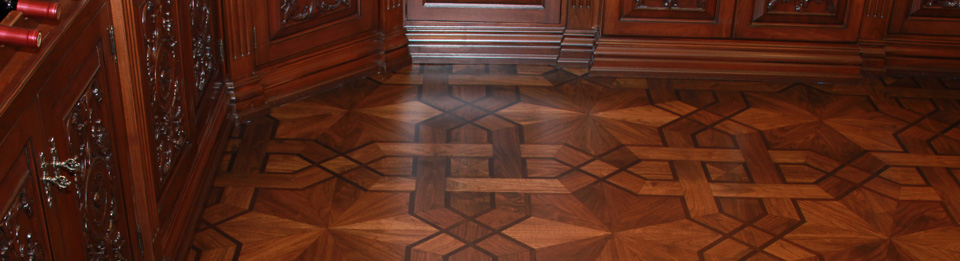
Squire Reclaimed Parquet Flooring - Classic Entryway Pattern
Squire pattern parquet flooring represents the quintessential entryway flooring design—a striking geometric composition featuring nested squares arranged in concentric formations creating bold visual impact perfectly suited for foyers, hallways, and transitional spaces where first impressions matter. This classic parquet configuration showcases multiple square frames positioned one within another, each rotated 45 degrees relative to its neighbors, generating dynamic diamond-and-square interplay that guides visitors' eyes inward toward home interiors. The Squire pattern demonstrates high-standard quality parquet craftsmanship through precision joinery, symmetrical balance, and intelligent wood grain orientation creating floors that invite guests to pause and admire the stunning design inspiration underlying traditional hardwood artistry. As an ideal choice for entryways, Squire parquet establishes sophisticated tone from the moment visitors cross the threshold.
The Squire pattern's defining characteristic is its square-within-square architecture—typically featuring three to five concentric square frames, each offset at 45-degree rotation from the previous frame. The outermost square aligns with room walls providing architectural anchoring, while inner squares rotate creating diagonal diamond orientations. At the pattern's center, a small square or diamond motif provides focal point. This nesting arrangement creates compelling optical effects: the rotated squares appear to spiral inward drawing attention toward the center, while the alternating horizontal and diagonal orientations generate visual movement and energy despite the geometric regularity. Wood grain direction alternates between squares—one frame shows vertical/horizontal grain, the next shows diagonal grain at 45 degrees—enhancing pattern definition through grain direction contrast even before considering species or color variations.
Understanding Squire Pattern Construction
The Squire parquet geometric system follows structured principles:
Concentric Square Framework: A typical Squire pattern consists of five square frames: (1) Outer border square, 36-48 inches per side, grain running parallel to walls; (2) First rotated square, 28-36 inches per side, rotated 45 degrees creating diamond orientation; (3) Second square frame, 20-26 inches, returning to wall-parallel orientation; (4) Third rotated square, 12-16 inches, again at 45-degree diamond orientation; (5) Central square or diamond, 6-8 inches, providing visual termination point. Each square frame typically consists of 2-4 inch wide wood strips mitered at corners ensuring geometric precision.
45-Degree Rotation System: The alternating rotation between concentric squares creates Squire pattern's dynamic character. When squares align with walls (0-degree orientation), wood grain runs horizontal and vertical relative to the room. When rotated 45 degrees (diamond orientation), wood grain runs diagonal creating entirely different visual texture. This rotation also affects light reflection—light hitting wall-parallel grain reflects differently than light hitting diagonal grain, creating subtle sheen variations that enhance pattern depth.
Corner Mitering Precision: Each square frame requires perfect 45-degree miters at all four corners. In wall-parallel squares, miters bisect the right-angle corners at 45 degrees. In rotated diamond-orientation squares, miters must still maintain 45-degree angles despite the frame's diagonal orientation—this double-angle complexity demands exceptional cutting precision. Any miter gap or angle inaccuracy becomes immediately visible disrupting the pattern's geometric perfection.
Species and Color Variation: Squire patterns can use single wood species (relying on grain direction for visual interest) or multiple species (adding color contrast). Common approaches include: oak outer frames with walnut inner frames creating light-to-dark progression toward the center; alternating light and dark frames (oak, walnut, oak, walnut) creating checkerboard effect; three-species patterns (oak, maple, walnut) adding even more color variation. The species/color strategy dramatically affects the pattern's visual weight and formality level.
Wood Species Selection for Squire Parquet
White oak serves as primary species in most Squire parquet:
Neutral Light Color: White oak's honey-blonde to light tan coloring provides neutral backdrop ideal for entryway applications. The light color doesn't overwhelm entry spaces, maintains bright welcoming atmosphere, and complements various interior design styles from traditional to transitional to contemporary. Oak's subtle color variation (cream sapwood to golden heartwood) adds organic warmth without creating busy appearance.
Durability for High-Traffic Areas: Entryways endure intense foot traffic—every person entering or exiting passes over the entry floor. White oak's Janka hardness of 1360 provides excellent wear resistance maintaining appearance despite concentrated traffic. The wood's density resists denting from heels, dropped keys, and pet claws common in entry areas.
Grain Texture and Refinishing: Oak's prominent open grain adds textural interest visible when closely examining the pattern. This grain character accepts stain well allowing color customization—natural clear finish showcases oak's inherent honey tones, medium brown stains create richer appearance, grey stains achieve contemporary Scandinavian aesthetics. Oak's hardness and thickness allow multiple refinishing cycles over the floor's 50-100+ year lifespan ensuring long-term investment protection.
Walnut adds contrast:
Rich Dark Accent: Walnut's chocolate to purple-brown coloring provides dramatic contrast against oak's blonde tones. Using walnut for inner squares creates visual progression from light (exterior) to dark (center) guiding eyes inward. Alternatively, alternating oak and walnut frames creates strong light/dark rhythm emphasizing the square-within-square geometry.
Fine Grain Complement: Walnut's straight, fine grain texture complements oak's coarser grain. The grain difference adds subtle textural variety enhancing tactile and visual interest. Both species machine cleanly to smooth surfaces creating seamless transitions where oak and walnut meet within the pattern.
Alternative species: Maple (very light blonde), cherry (medium reddish-brown), mahogany (rich reddish-brown), or exotic species like teak or wenge can substitute or augment oak and walnut depending on desired color palette and budget. However, oak and walnut remain the traditional Squire pattern pairing balancing cost, durability, color contrast, and availability.
Design Applications for Squire Parquet
Where Squire pattern excels:
Entry Foyers: The primary traditional application—Squire parquet in entry foyers creates powerful first impression. The concentric squares naturally center in foyer spaces drawing attention to the room's heart. The pattern's geometric formality signals to visitors that they've entered a well-appointed home where design thoughtfulness extends to every detail including floors. Squire foyer floors establish sophisticated tone setting visitor expectations for the interior spaces beyond.
Formal Hallways: Connecting public areas (living rooms, dining rooms) with private zones (bedrooms, studies), formal hallways benefit from Squire pattern's directional quality. The concentric squares can be oriented to guide movement—multiple Squire modules arranged in sequence create visual pathway encouraging progression through the space. The pattern's formality maintains consistency with adjacent formal rooms.
Transition Zones: Spaces connecting distinctly different areas—mudroom to kitchen, garage entry to home interior, sunroom to main house—use Squire parquet to mark threshold crossings. The pattern's visual weight signals "you are entering a different space" without requiring physical barriers like doors or walls. This spatial definition through flooring change proves particularly effective in open-plan homes where floor treatment provides primary room definition.
Vestibules and Airlock Entries: Formal homes often feature double-entry systems—outer door to vestibule, vestibule to interior entry, interior entry to main living areas. Squire parquet in the vestibule creates elegant transition space, particularly effective when the vestibule flooring contrasts with both exterior (often stone or tile) and interior (perhaps plank hardwood) creating distinct intermediate zone.
Stair Landings: Grand staircases often include landings at turns or level changes—Squire parquet defining these landings creates visual punctuation in the stair sequence. A centered Squire pattern on a stair landing provides natural focal point where people pause during ascent or descent, turning architectural necessity into design opportunity.
Powder Room Entries: Luxury homes sometimes extend decorative parquet into powder room entrance zones (though typically not into the actual bathroom where moisture concerns arise). A small Squire pattern (30-36 inch overall dimension) outside a powder room door signals the room's presence and importance within the home's hierarchical space arrangement.
Historical Context and Cultural Associations
Squire pattern parquet emerged in the late Victorian and Edwardian eras (1880-1910) when parquet flooring reached widespread popularity in middle and upper-class American and European homes. The name "Squire" likely references English country estates where the local squire (land-owning gentleman below aristocratic rank but above common farmers) lived in manor houses featuring such flooring. The pattern conveyed aspirational associations—homeowners installing Squire parquet positioned themselves as having achieved sufficient social and economic status to afford decorative flooring characteristic of gentry residences.
American pattern book manufacturers in the early 1900s mass-produced Squire parquet tiles making the pattern accessible beyond ultra-luxury custom homes. Pre-fabricated Squire tiles (typically 24x24 or 30x30 inches containing the complete concentric square pattern) sold through catalogs democratized access to decorative parquet. Middle-class homeowners could install Squire tiles in foyers creating manor-house aesthetics at fraction of custom installation costs.
The pattern's geometric simplicity (compared to more complex European designs like Versailles or Fontainebleau) aligned with American tastes favoring clarity and directness over ornate complexity. Squire's clean square geometry appealed to American sensibilities appreciating honest craftsmanship and legible design over excessive decoration.
Installation Methods and Considerations
Squire parquet installation approaches:
Pre-Fabricated Panel Installation: Modern Squire parquet typically comes as factory-assembled panels containing the complete concentric square pattern. Common panel sizes include 24x24, 30x30, and 36x36 inches. These panels install via full-spread adhesive on flat subfloors. Panel installation ensures geometric accuracy (pattern assembly occurs in controlled factory conditions with precision equipment) while reducing on-site labor costs. Installation resembles large-format tile work requiring flat subfloors, proper adhesive coverage, and careful panel alignment.
Custom Field Assembly: Ultra-luxury projects may warrant field-assembled Squire patterns allowing complete size customization and infinite design variation. Field assembly involves cutting individual wood strips, mitering corners on-site, and assembling the concentric squares piece-by-piece directly on the subfloor. This method permits pattern scaling to exact foyer dimensions, incorporation of multiple wood species in complex arrangements, and integration of pattern variations within the Squire framework. However, field assembly costs 3-4x more than panels due to intensive skilled labor requirements.
Subfloor Requirements: Like all geometric parquet, Squire patterns demand exceptionally flat subfloors—flat within 1/8 inch over 10 feet. Concrete subfloors prove ideal providing inherent flatness and stability. Wood subfloors require careful leveling and stiffening preventing flex that could telegraph through the pattern. The rotated diagonal squares in Squire patterns particularly show subfloor irregularities since the 45-degree grain orientation highlights rather than hides bumps and dips.
Pattern Centering and Orientation: Installers must carefully plan Squire pattern placement within the entry space. The pattern should typically center on the foyer's primary axis (usually the line from front door to interior door or hallway). In rectangular foyers, centering might occur at the long-axis midpoint creating balanced composition. Pattern orientation matters less than centering since Squire's square geometry appears balanced from any viewing angle (unlike directional patterns like herringbone which have strong orientation bias).
Border Treatments: Squire patterns rarely terminate cleanly at room edges—the outer square typically requires border framing. Common border approaches include: solid wood border strips 3-6 inches wide in contrasting species (walnut border around oak pattern), simplified parquet border in basketweave or herringbone pattern, or stone/tile border creating material transition. Borders must be precisely cut to accommodate Squire pattern's geometry ensuring professional appearance.
Finishing and Maintenance
Finishing Squire parquet: After installation, the floor is sanded flat removing any level differences between panels and creating smooth transitions between wood species. Final sanding must be gentle—aggressive sanding risks creating depressions in softer woods while harder species remain higher disrupting pattern flatness. Multi-directional sanding (parallel to walls, diagonal at 45 degrees, perpendicular to walls) ensures even material removal across all grain orientations in the pattern.
Finish selection affects pattern appearance significantly. Water-based polyurethane maintains original wood colors—oak stays light, walnut stays dark—maximizing color contrast. Oil-based polyurethane ambers both species reducing contrast while creating warm unified glow. Some designers prefer lower-sheen finishes (satin or matte) for traditional aesthetics where high-gloss polyurethane reads contemporary.
Maintenance practices: Entry floors require vigilant maintenance since they're first contact points for outdoor dirt, moisture, and abrasives tracked indoors. Entry mats outside and inside the door capture most contaminants before reaching the Squire pattern. Regular sweeping or vacuuming removes grit preventing scratching. Immediate spill cleanup prevents moisture penetration into wood.
Seasonal maintenance includes inspecting for loose panels or pieces (address immediately), checking finish wear in high-traffic paths (refinish proactively before wood damage occurs), and maintaining appropriate indoor humidity (40-60%) preventing excessive expansion or contraction. Professional cleaning and recoating every 3-5 years maintains finish protection extending the time until full refinishing becomes necessary.
Pricing and Value
Squire parquet pricing:
Material Costs: Pre-fabricated Squire panels cost $30-55/sq ft depending on wood species (oak-only patterns cost less than oak-walnut combinations), panel size (larger panels more economical per square foot), and quality grade (select grade costs more than common grade showing more natural variation). Custom field-assembled patterns cost $50-90/sq ft in materials.
Installation Costs: Professional installation of pre-fabricated panels costs $15-28/sq ft including subfloor preparation, adhesive, and finishing. Field-assembled patterns cost $35-60/sq ft installation labor. Total installed costs range $45-80/sq ft for panel systems, $85-150/sq ft for custom field assembly.
Project Budgets: A typical 8ft x 10ft entry foyer (80 sq ft) in Squire parquet costs $3,600-6,400 for panels or $6,800-12,000 for custom work. These costs position Squire as premium flooring but accessible to upper-middle-class homeowners unlike ultra-luxury custom medallions often exceeding $20,000 for small spaces.
Value Proposition: Squire parquet provides lasting value through: distinctive entry floor creating memorable first impressions, durable construction withstanding heavy traffic with minimal maintenance, refinishing potential allowing 40-80+ years of life, and home value contribution—custom flooring differentiates properties in competitive markets justifying premium pricing.
Design Variations and Customization
Contemporary Squire interpretations include:
Simplified Two-Square Patterns: Reducing concentric squares to just two or three frames creates cleaner, more contemporary appearance suitable for transitional or modern interiors. The simplified version maintains Squire's essential nested-square geometry while reducing ornamental complexity.
Oversized Scaling: Enlarging the traditional pattern 150-200% creates dramatic impact in large modern foyers with high ceilings. Oversized Squire patterns (60-72 inch overall dimension) make bold architectural statements in contemporary homes.
Mixed-Material Combinations: Some luxury installations incorporate non-wood materials—stone or tile forming one or more square frames with wood providing contrasting frames. These material combinations add textural variety and can improve moisture resistance in entry applications.
Color Staining Variations: Using single wood species (typically oak) but staining alternate frames in different colors (natural, medium walnut, dark espresso) creates Squire pattern through color alone. This approach provides geometric pattern clarity while simplifying material sourcing and ensuring uniform wood characteristics across the entire floor.
Request Samples and Consultation
Given Squire parquet's investment level and design impact, professional consultation is recommended. Visit our showroom to examine Squire pattern samples in various wood species combinations, discuss sizing and customization for your specific entry dimensions, and review installation approaches and timelines.
Request samples showing oak and walnut combinations, or request a detailed project quote providing foyer dimensions, preferred species, and project timeline.
Call 213-792-5908 to schedule a Squire parquet consultation. Our team will help you select the ideal pattern scale and wood species combination for your entryway creating lasting first impressions.
Visit Our Showroom
See Squire parquet samples and wood species options at our showroom: 9216 S. Vermont Ave, Los Angeles, CA 90044
Showroom Hours:
Monday - Friday: 8:00 AM - 5:00 PM
Saturday & Sunday: By Appointment
Call 213-792-5908 to schedule your Squire parquet flooring consultation.
Explore Expanded Options
Browse additional parquet patterns, entryway designs, and custom geometric configurations not shown on this page.
View Full Gallery →